

It’s coming up on three years since I opened Tiger Eye.
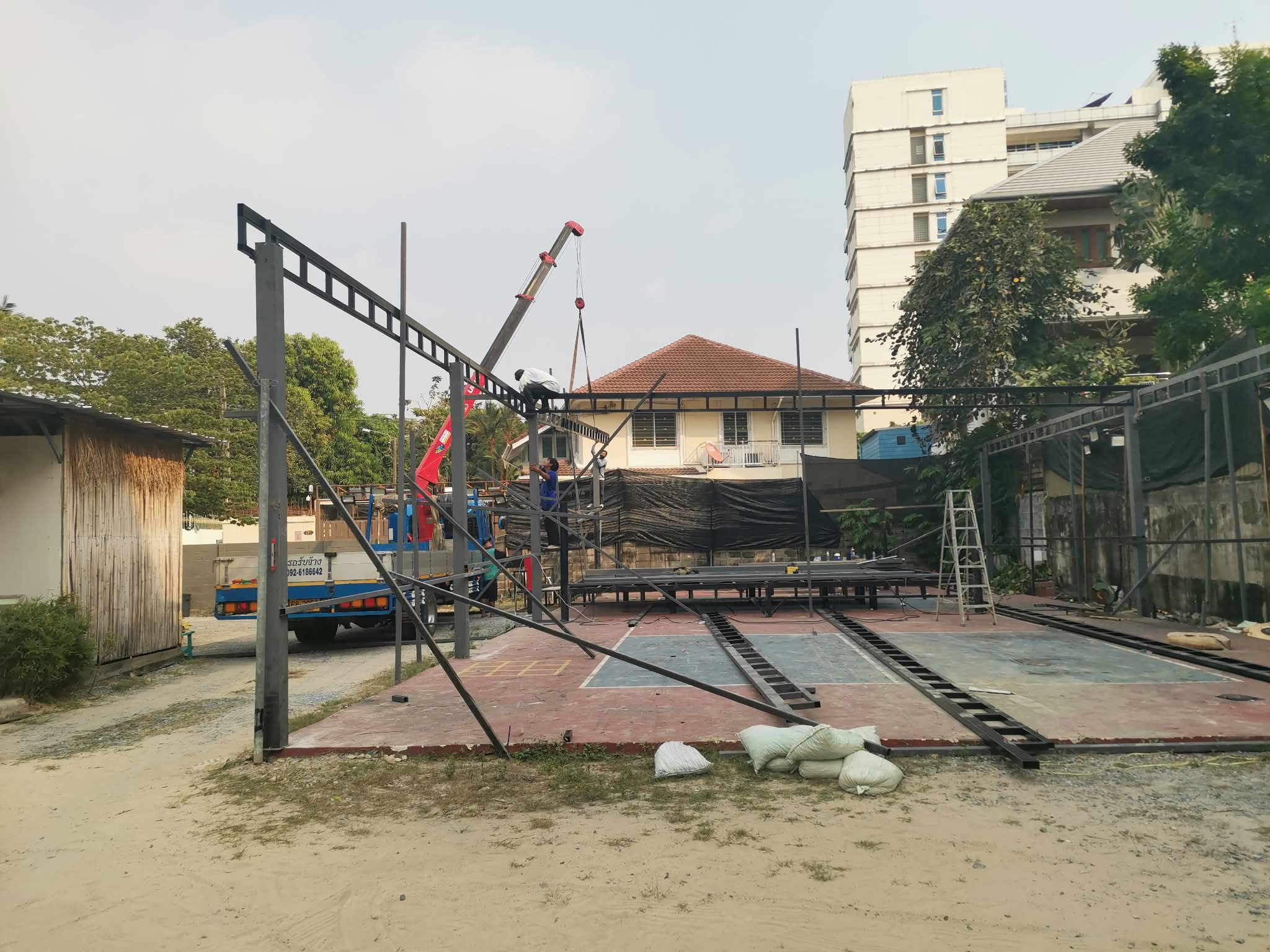
In January 2024, we started building. But around this time three years ago, I didn’t even know where Tiger Eye was going to be.
I was still looking for a place. I wouldn’t say I was desperate, because I was confident and I wasn’t panicking, but I knew that I had to take whatever opportunity was given to me.
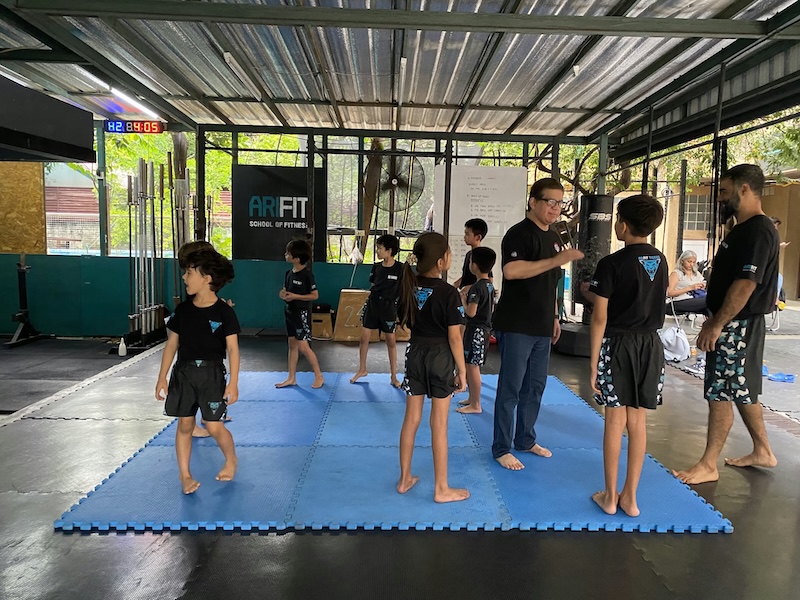
At that point, I had already been teaching kids in my neighborhood of Ari for some time. Really, that started simply because I wanted to make friends for my son when we first moved to the neighborhood.
Eventually, I started thinking seriously about opening a gym here.
I had meetings with people and found some possible locations. Actually, I felt quite lucky that I had any leads at all. I had done a pretty good job of reaching out, making connections and getting involved in the community.
The problem was Ari.
Ari is expensive.
It’s a great neighborhood. Time Out even voted it one of the coolest neighborhoods in the world at one point. I knew I wanted to stay here because I consider Ari a pretty special place, but as I started looking around, it quickly became obvious that finding enough space for a proper Muay Thai gym was going to be very, very tricky.
I needed to think outside the box.
I made a PDF explaining what I was looking for and sent it to basically everybody I knew, asking them to share it.
At around the same time, somebody told me, “Hey, there’s this pickleball and beach volleyball place in Ari. Maybe they have some space.”
By then I had developed this habit of running through the neighborhood looking for a gym location. I would run through the sois, alleys and basically every nook and cranny of Ari looking for some plot of land, abandoned building or place that might possibly be available.
Eventually I ran past the pickleball place.
I went inside and looked around.
It was packed.
So I thought, well, thanks to whoever suggested this, but why the hell would these people rent space to me?
I left it at that.
Then, a few weeks or maybe a couple of months later, the owner of the business operating there contacted me.
Would I be interested in renting some space?
The Pickleball Court That Became a Muay Thai Gym
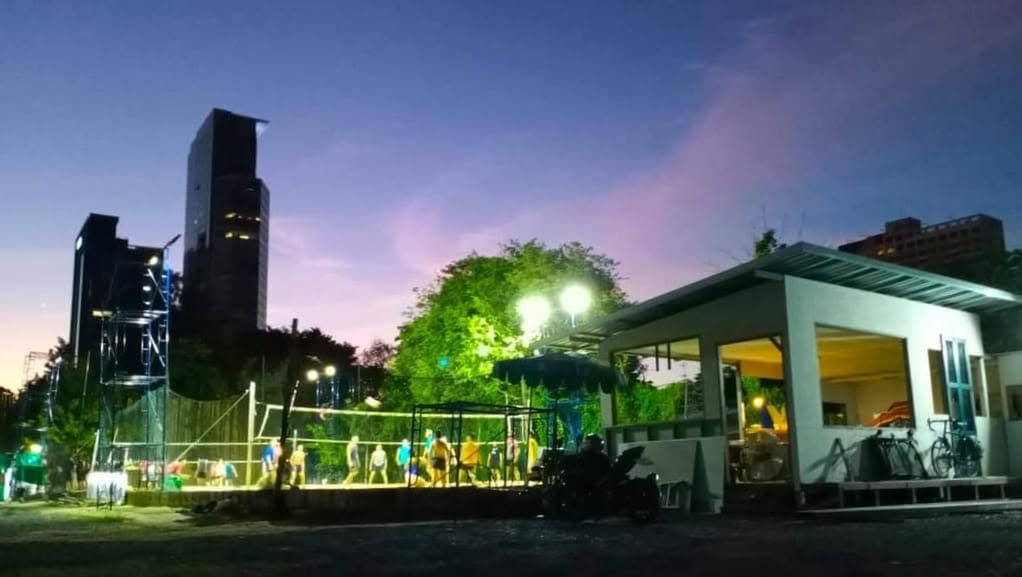
What he was actually offering me was a pickleball court.
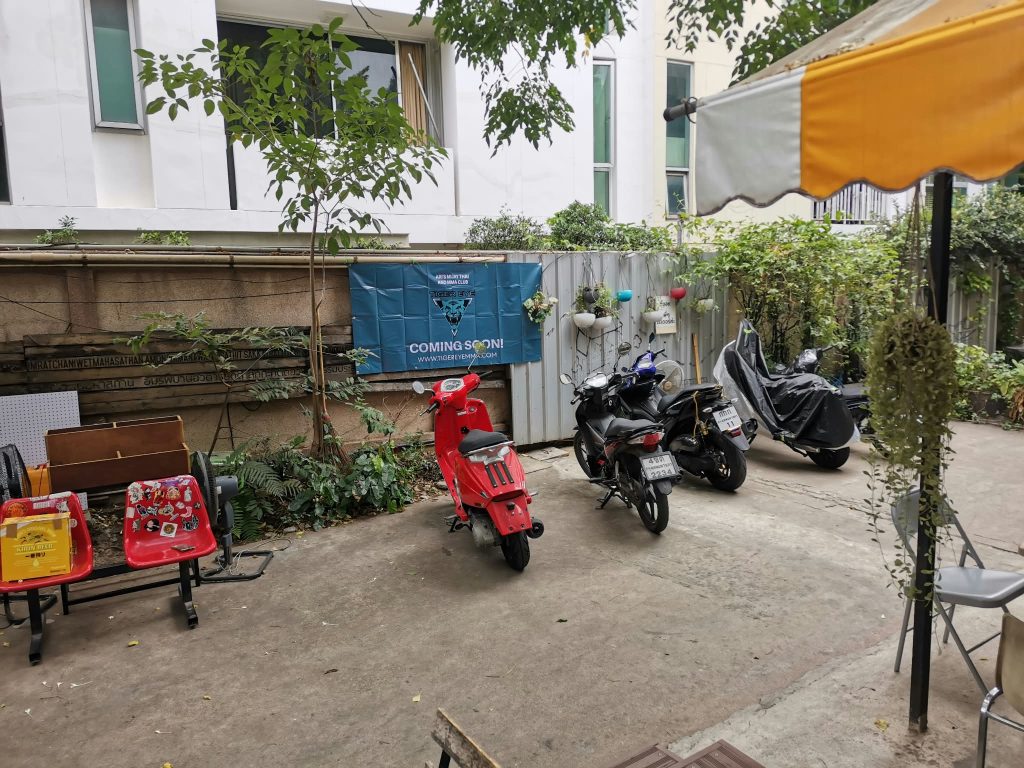
I came over and looked at it again. The rent was reasonable. There were already bathrooms. There was a café. There was a reception area. It wasn’t just an empty plot of land.
I thought it was a really good opportunity.
So I took it.
We agreed to what I considered a short-term lease—around three years—and I started building on top of a pickleball court.
I’m not entirely sure they understood what I was planning to build.
Part of me thinks they expected me to use the pickleball court on Saturday afternoons to teach some kids.
Instead, I built a Muay Thai gym.
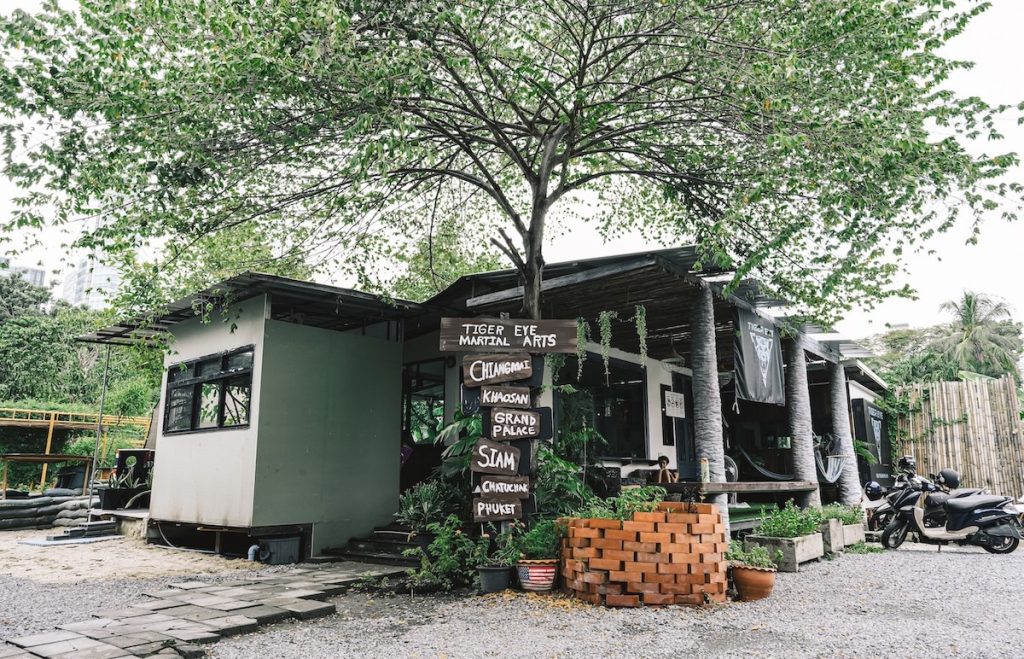
It wasn’t anything crazy, but it was a legitimate covered Muay Thai gym.
The problem was that our position was precarious.
We only had a three-year agreement, and we were subleasing. If the person we were renting from had to leave, we were basically at his mercy. And after three years, if he wanted to massively increase the rent or simply tell us to leave, we could have had a serious problem.
But there are times in life when you just have to take action.
You can’t always wait until every piece is ready.
Sometimes you just have to move and hope that by moving, other opportunities open up.
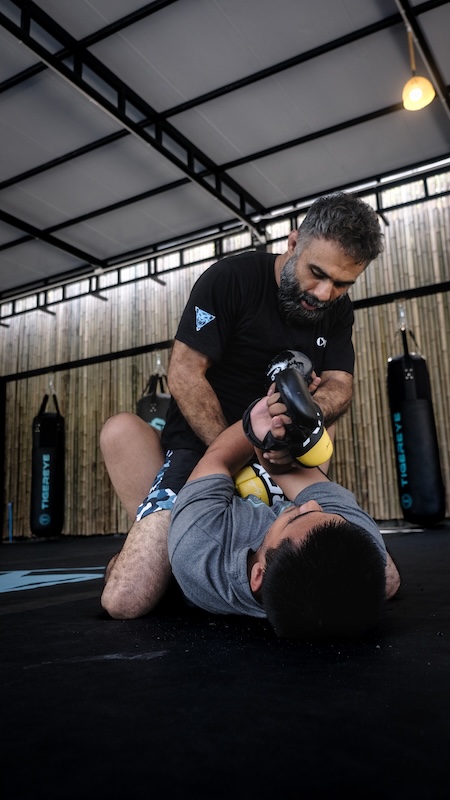
It’s actually a lot like jiu-jitsu.
If somebody is on top of you, you don’t just lie there hoping they’ll eventually decide to get off. They might be stronger than you. They might be better than you. You might not be able to simply lift them off.
But you have to move.
You wiggle. You squirm. You create movement.
And somewhere inside that movement, maybe a little space appears. Then you can make a bigger movement. Then maybe there’s an escape.
I think life works like that too.
Sometimes you have to act.
And sometimes, after you act, you discover that what looked like an imperfect opportunity actually was the perfect opportunity.
That is pretty much what happened to us.
The Idea Actually Started Years Earlier
Long before Tiger Eye existed, I had wanted to open a gym in Thailand.
My original idea was almost like a monastery or a commune.
People would train martial arts, grow vegetables, live closer to the land and get away a little bit from the modern world.
And that idea actually has a history behind it.
One of the most important people in the story of Tiger Eye is my friend Niran.
I’ve known Niran for coming up on 30 years. We went to international school together in Malaysia. He is Thai, but he also grew up in the West, so he has always been someone who could straddle both worlds.
More importantly, he’s a childhood friend. He’s somebody I trust.
Around 2008, I was a couple of years into my martial arts journey and traveling through Thailand. At the same time, Niran had spent about two years as a Buddhist monk.
His family is from Ubon Ratchathani, and by pure coincidence I was heading to Ubon to train at Legacy Gym, which at the time was one of the relatively few MMA gyms in Thailand.
Right around then, Niran contacted his friends to tell us that he was going to disrobe—leave the monkhood.
The timing was completely coincidental.
I stayed at his family home, trained at Legacy, and also spent some time with him at the monastery immediately before he left.
So in a strange way, I was one of his first friends there as he was coming out of the monastery while I was entering deeper into the martial arts world.
We talked about my eventually moving to Thailand and this idea of creating somewhere that could combine martial arts and meditation.
About ten years later, I did move to Thailand.
In some ways, the idea that eventually became Tiger Eye goes back to those conversations.
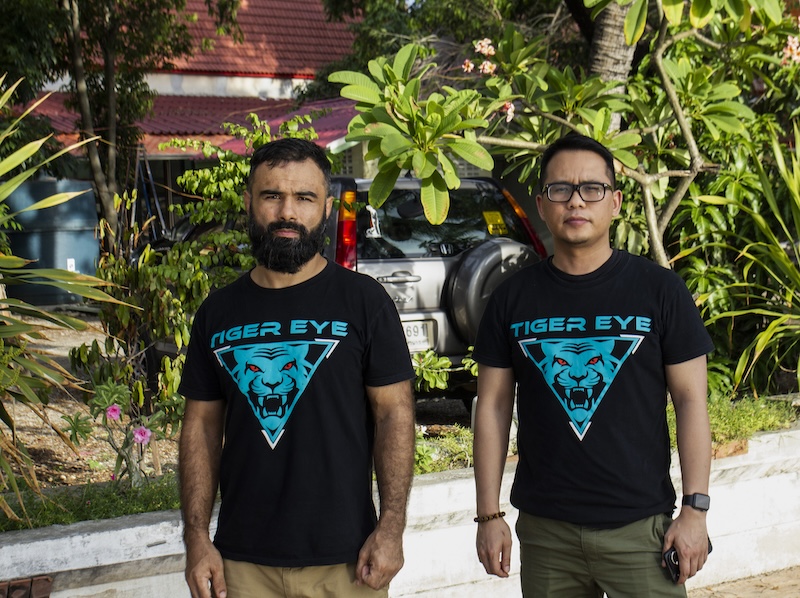
Even the Tiger Eye logo comes from Niran.
He has a tiger tattoo on his chest based on a nickname his father gave him: Little Tiger.
The tattoo came first.
The Tiger Eye logo came later.
I never imagined that the place we had talked about would eventually be built in Bangkok.
But somehow that is what happened.
The People Behind Tiger Eye
Tiger Eye is obviously something I founded and something I’m deeply involved with every day, but when I say “we built it ourselves,” there is definitely a we involved.
Niran was part of that from the beginning.
Another important person was Note. His family has deep roots in Muay Thai through Lookchaomaesaitong Gym (ลูกเจ้าแม่ทรายทอง), the camp associated with legendary Lumpinee champion Coban Lookchaomaesaitong, who famously fought Ramon Dekkers four times.
Note and I were introduced through George Hickman. At the time, Note had his own ambitions to develop a large fitness facility, something he is now pursuing separately in Salaya, but we came together around Tiger Eye.
Then there is the Azeemi family.
The workers who helped us with the original construction came through a Pakistani man I knew whom I had originally met while looking for Sufi meditation. That connection developed into something much larger, and the Azeemi family became an important part of the Tiger Eye story. I’ve written separately about that relationship and how it developed.
Then people continued to arrive in ways that were often much less planned than you might imagine.
View, who became an important part of our administrative operation, originally came through a friend who simply wanted to help her friend who had moved to Bangkok find a job.
Looking back, that is probably a recurring theme.
You can make business plans and organizational charts, but some of the people who become most important to an organization enter your life through relationships, recommendations and sometimes complete coincidence.
Tiger Eye itself was self-funded rather than something we built through outside institutional investment.
That also meant we had to be careful about what we spent.
And construction was where that became very obvious.
Building It Ourselves
I knew basically nothing about construction.
We got some really wild quotes from contractors.
They were way beyond what I could afford, even though I had done a good job of saving money from my time working at ONE Championship.
So we decided we would have to do it ourselves.
When I say “ourselves,” I don’t mean that I personally grabbed a hammer and built an entire Muay Thai gym alone—although there were definitely parts where I did literally work on it myself, and I remain very hands-on today.
I mean we managed the project ourselves.
We designed it ourselves. We sourced and purchased the materials ourselves. We organized the labor ourselves.
And I learned a lot about construction very quickly.
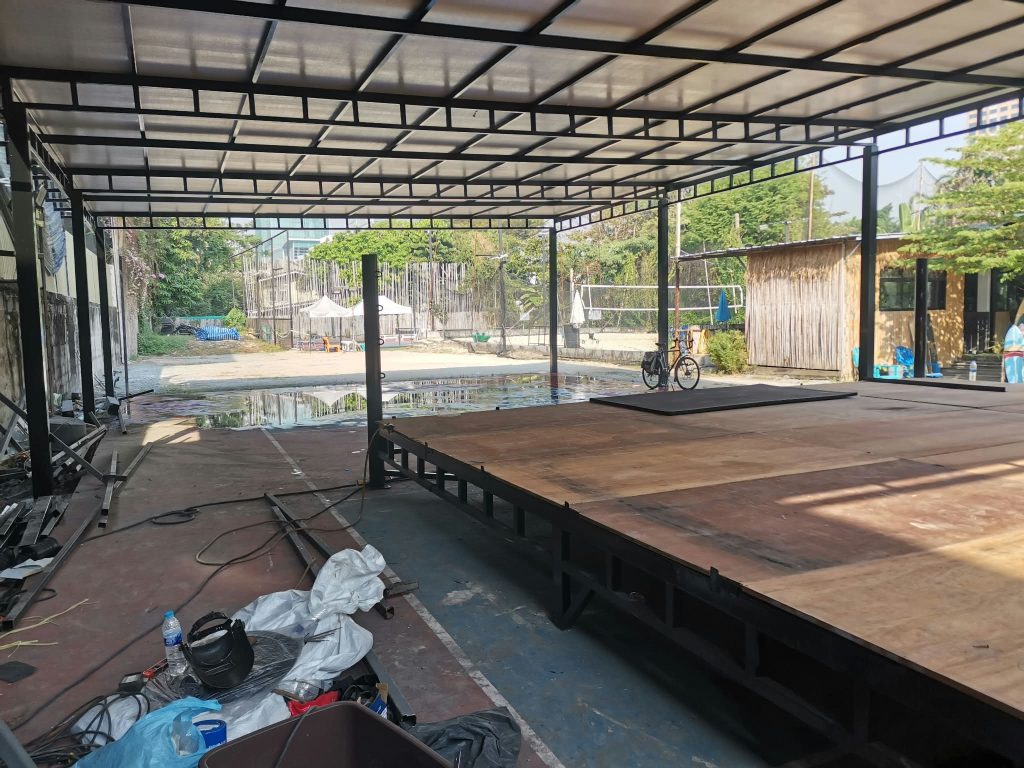
Within about six weeks, we had something over our heads that we could train under.
Then we started classes.
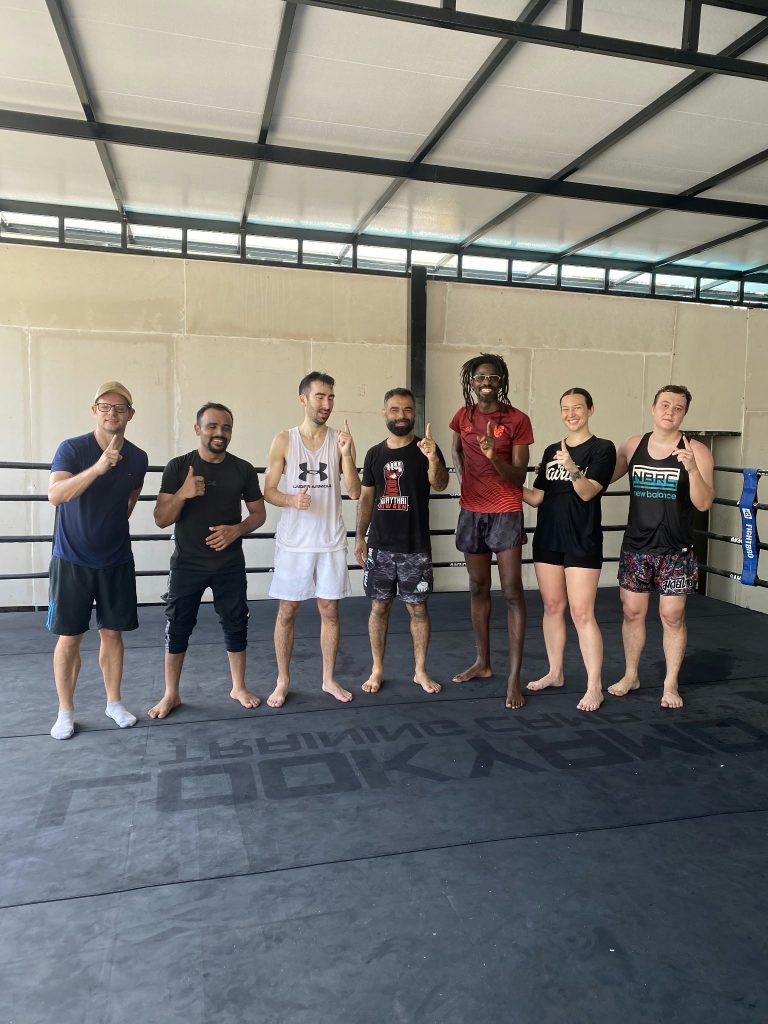
At that point, it was a fight for every single person who walked through the door.
For a completely new gym, though, I think we did pretty well.
We were lucky because I already had this small community of families from the kids’ classes I had been teaching. They shared news about the gym, promoted us and helped kick-start the whole thing.
Then, in July, something happened.
The Noise Problem
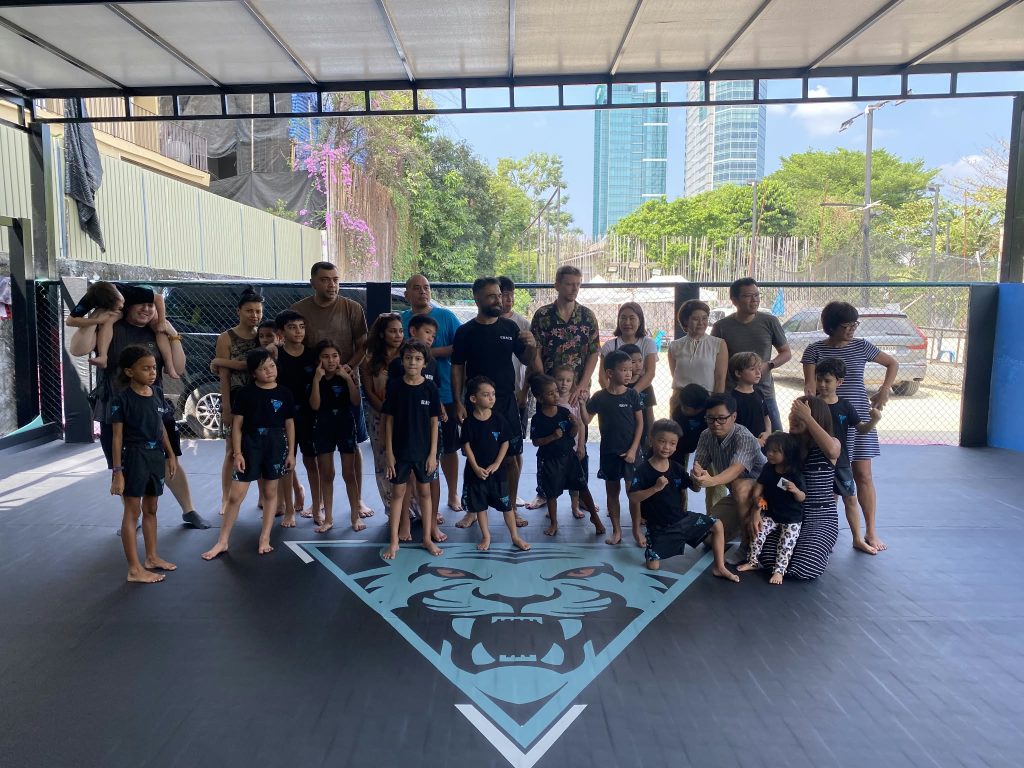
We got a visit from the district office.
There had been complaints about noise.
When the officials came, they were surprised to discover a Muay Thai gym there.
The funny thing is that the property had already been receiving noise complaints before we arrived.
Pickleball, if you’re not aware, has a surprisingly serious noise problem around the world. Apparently people really, really hate that constant doink-doink-doink sound.
Then somebody decided to add a Muay Thai gym.
Obviously that did not improve the situation.
That visit began what became roughly a year-long odyssey involving government authorities, police stations, legal proceedings and trying to figure out how all of this was going to be resolved.
There are parts of that story I can’t really get into for legal reasons.
But eventually the other business—the pickleball and beach volleyball operation—had to leave.
We were able to make adjustments to control our noise sufficiently and survive.
But when the other business left, that created another enormous question:
What happens to us?
Do we have to leave too?
Fortunately, we were able to reach an agreement directly with the landowner.
And suddenly everything changed.
The Problem Became the Opportunity
We went from having a relatively small gym on a precarious short-term sublease, with limited room to grow, to having one of the larger pieces of land available to a Muay Thai gym this close to central Bangkok.
There were still hurdles. We had to sort things out with the local government and deal with the various requirements that came with what we were doing.
But we had been cooperative throughout the process, developed a good relationship and were eventually able to push through.
Now I could start building something much closer to that original vision.
A martial arts camp with an urban farm.
Chickens.
Edible plants.
Food.
A community.
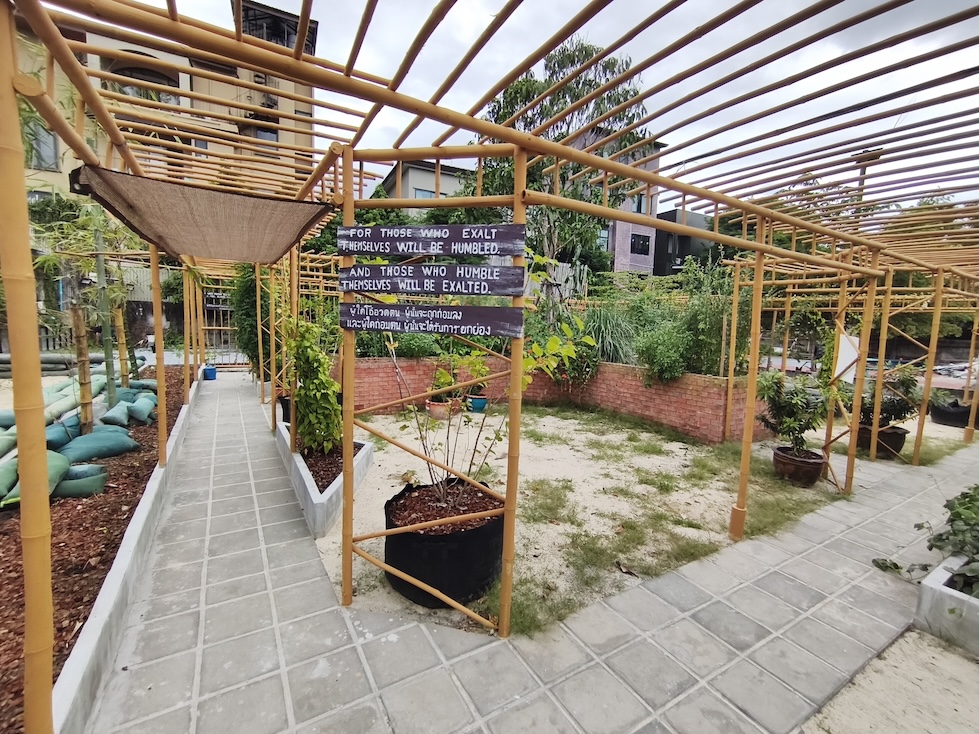
Except instead of being somewhere out in the countryside, it was in Bangkok.
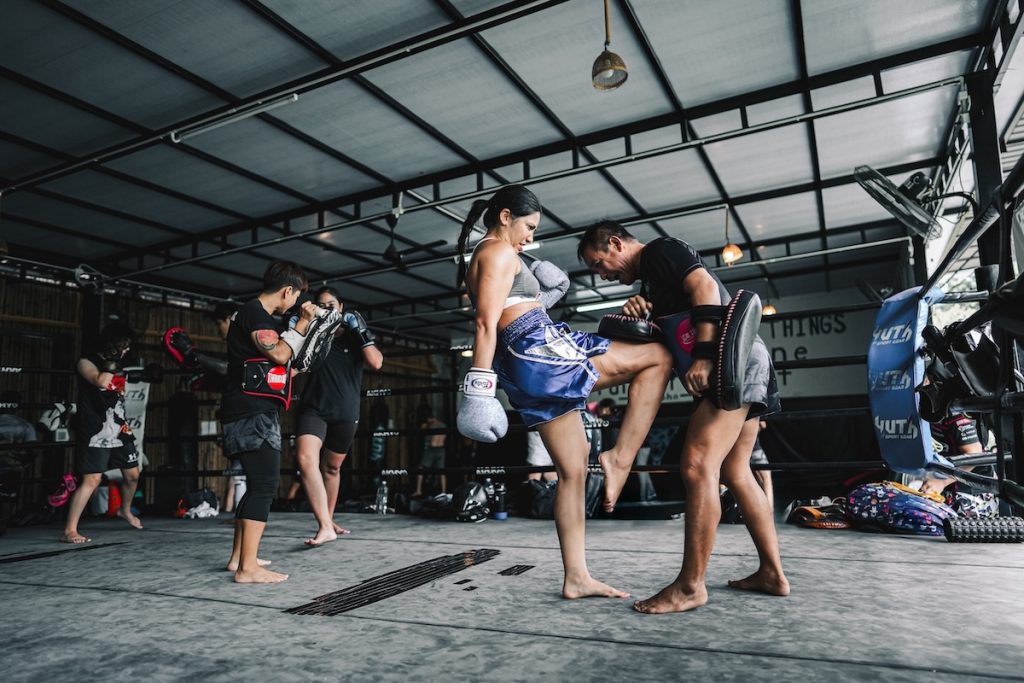
When we started, we had around 70 square meters of mat space, a 7 x 7 meter ring and eight heavy bags.
A solid Muay Thai gym.
Nothing huge.
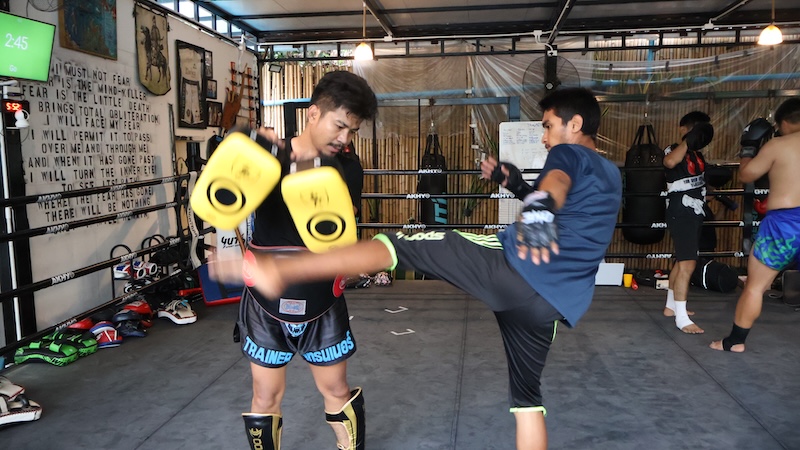
Today, we have what I would call an urban farm rather than simply a garden. We have a kitchen for staff and fighters. We have enough storage and infrastructure that we can properly sell equipment.
And now comes the next big step.
We’re building another indoor training area where we can blast pads and make as much noise as we want without disturbing the neighbors. We’re creating accommodation for staff. We’ll still have our other training areas, which means we can dramatically expand what we do with the property.
And we can start taking another step toward having a real professional fight camp and fight team.
What Is It Like Opening a Muay Thai Gym in Thailand as a Foreigner?
People might expect this to have been a major concern for me.
Honestly, it wasn’t.
I’m absolutely not the first foreigner to open or operate a Muay Thai gym in Thailand.
In fact, the first Muay Thai gym I trained at in Thailand was Rawai Muay Thai in Phuket, which at the time was being run day-to-day by a New Zealander.
So I never really had this anxiety of: What are Thai people going to think about a foreigner having a Muay Thai gym?
The cultural differences are obviously there.
But strangely, some of the aspects of Thai culture that frustrate other foreigners actually fit my personality quite well.
I’m naturally fairly non-confrontational.
If there’s a problem, I generally prefer to address it diplomatically. So the Thai tendency to avoid unnecessary confrontation and allow people to save face isn’t particularly difficult for me to understand.
Sometimes I wish I could be more direct.
Sometimes things take longer.
Decision-making can be slower.
But if I had to choose between the two styles for the culture I personally want to work in every day, I actually prefer this one.
You take the good with the bad.
Being a foreigner can occasionally even give you a strange little advantage.
There are invisible rules in every culture.
Sometimes people assume that because you’re a foreigner, you don’t know those rules.
Even when you do.
And occasionally that gives you a little bit more room to maneuver.
But overall, I don’t think my biggest advantages came from simply being foreign.
They came from the experience I already had in the international MMA industry and the relationships and credibility I had developed over many years.
The bureaucratic side is another story.
As a foreigner, that can be an absolute nightmare.
It’s not simply that paperwork is boring and a pain in the ass. There is an additional layer of anxiety because getting something wrong can potentially affect your ability to operate, work or even remain in the country.
That changes the feeling of bureaucracy quite a bit.
So How Much Does It Cost to Open a Muay Thai Gym?
This is probably one of the things people reading this are going to want to know.
And I’ll share what I can.
At the same time, I’m not here to provide somebody with a blueprint for opening a competing gym next door to me—or next door to anybody else.
Long before I worked for ONE Championship, when opening a Muay Thai gym was still just something I hoped to do someday, I had a goal of saving US$50,000.
That was probably about ten years before Tiger Eye opened.
And I’ll say this:
I wasn’t too far off.
That doesn’t mean $50,000 was simply the construction budget. At that point, I didn’t even know what the eventual setup would look like. Would I rent an existing building? Build something? What would the paperwork cost? What equipment would I need?
It was simply my ballpark figure for getting a gym off the ground.
As for construction, the contractor quotes we initially received were around five to seven times what the facility ultimately cost us when we managed the process ourselves.
Interestingly, as we go through the process of building our new facility now, I’m seeing a similar phenomenon.
Did We Make Money?
We had revenue from the beginning.
Our expenses were also much lower then.
One enormous advantage I had was that, if necessary, I could teach every class myself.
I wasn’t opening a martial arts business and immediately depending on somebody else to provide the actual product.
I also had a legitimate résumé from my years in martial arts, my time in Thailand and my time with ONE Championship.
So yes, we made money in the beginning.
It wasn’t initially enough to completely cover everything, but we reached that point relatively quickly.
And if you ask me who really pays the bills today, it is our core community.
The people who live nearby.
The families.
The kids.
The regular members.
Different parts of the business generate revenue for different purposes, and some of that revenue gets reinvested into expansion.
But those core members are the foundation.
They’re also the people who, if another COVID-type disaster happened tomorrow, I could imagine saying, “Keep charging me. We want the gym to survive.”
Those people pay the bills.
Building a Gym Is Easier Than Building a Team
This is probably the biggest thing I underestimated.
You can build a roof.
You can buy mats.
You can buy a ring.
You can buy bags.
Building a genuine training team is different.
Look at many of Thailand’s great traditional gyms that have produced generations of high-level fighters.
Kids came into those gyms. They grew up there. They fought for the gym. Some eventually became trainers.
People went through years of fights, camps, wins, losses and hardship together.
It became a family and, in some cases, almost a dynasty.
You cannot replicate ten years of blood, sweat and tears in one year with fancy HR practices.
That takes time.
And when you’re a new gym, one of the problems is that you’re often hiring trainers who are already moving around between gyms.
Some people are simply looking for a better opportunity.
But sometimes people are floating around for a reason.
That’s something you learn too.
How Do I Choose Muay Thai Trainers?
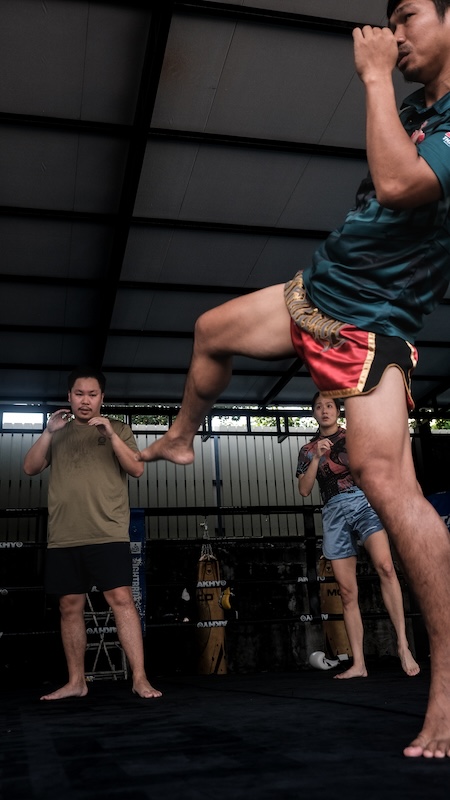
The first question is very simple:
Can they hold pads?
That’s the minimum requirement.
After that, though, the things I look at become much more personal.
Do I get along with them?
Can I sit around and joke with them?
Do they talk to me?
I actually like trainers who are chatty with me because it helps improve my Thai.
Do they get along with everybody else?
Do they create a positive environment?
Are members comfortable around them?
Are they reliable?
And do they constantly bring their personal problems into the gym?
Nobody is perfect.
If somebody has been with me for years, is loyal to the gym and runs into problems in their life, of course I’m going to try to help them.
That’s very different from somebody arriving on day one and immediately bringing their problems through the door.
I’ve experienced that too.
And that’s usually a no-go.
Does a Trainer’s Fighting Résumé Matter?
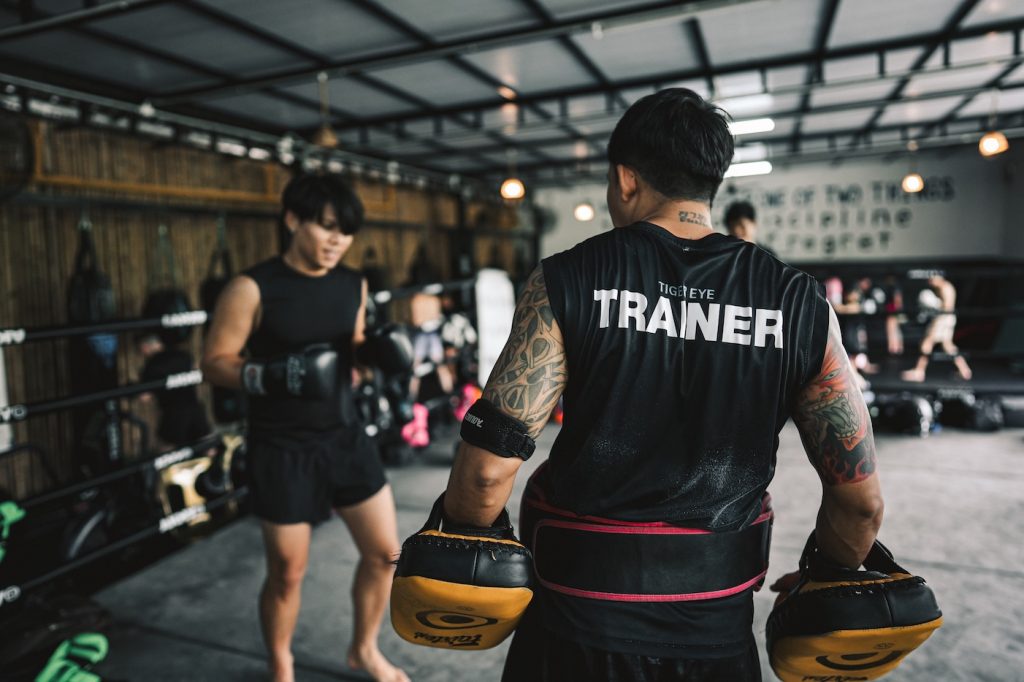
Yes.
But maybe not in the way people imagine.
A fighting résumé tells you something about someone’s technical experience, obviously, but it can also tell you what they’re capable of providing as a training partner.
For serious fighters, that can be extremely important.
But the best former fighter is not automatically the best trainer for every student.
The trainer you need for a tourist or beginner may be very different from the trainer you need to develop a professional fighter.
For beginners and recreational students, language ability matters.
Patience matters.
And maybe most importantly, the trainer has to understand why that person is training.
Not everybody walking into a Muay Thai gym wants to become a fighter.
Some trainers who come from serious fighting backgrounds don’t naturally understand that.
And that’s fine.
It doesn’t necessarily make them bad trainers.
It may mean they’re much better suited to the fighting side of the gym.
Likewise, somebody who is wonderful with a nervous beginner isn’t automatically the person I want preparing a professional fighter for a major stadium.
There isn’t one type of good Muay Thai trainer. There are different trainers for different jobs.
Learning to Adjust My Own Expectations
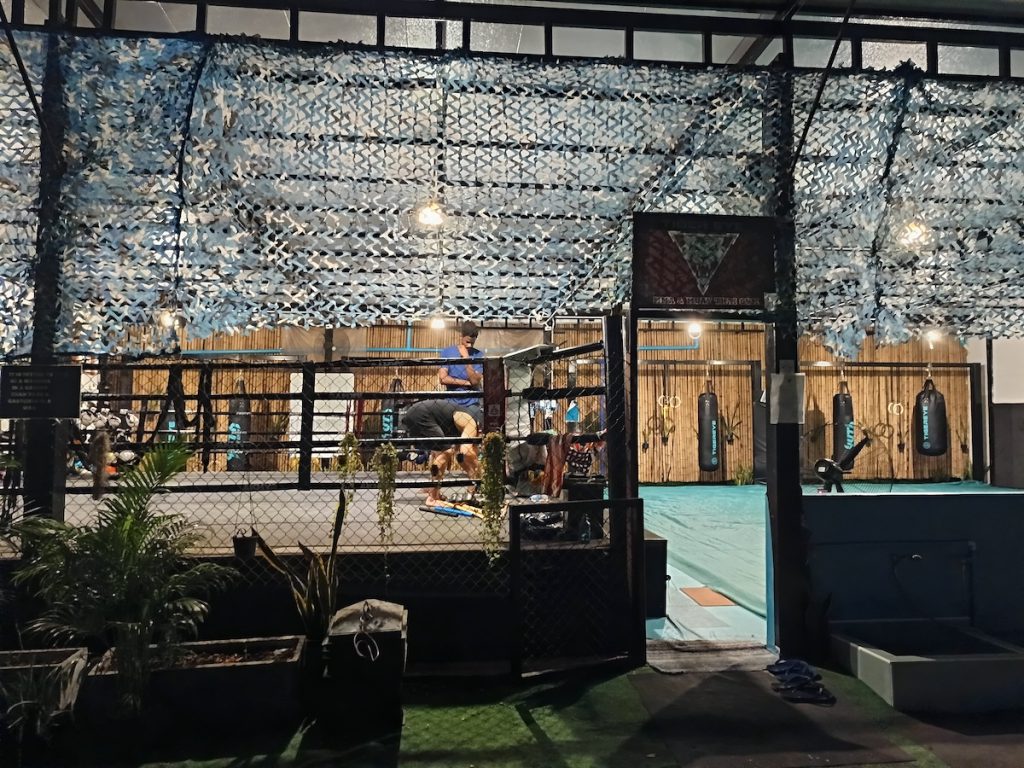
I probably set my expectations too high when we first opened.
There were things trainers did that used to bother me that don’t really bother me anymore.
One of the things people love about Thailand is that it’s laid-back.
Then sometimes foreigners open businesses here and become frustrated when the people working for them are laid-back.
You can’t really have it both ways.
Running a sharp business and having a very laid-back culture don’t always fit together perfectly.
So you have to figure out which things actually matter.
Can the trainer hold pads?
Are they reliable enough?
Do they treat members properly?
Do they contribute positively to the gym?
Can they work with the rest of the team?
If the answers to those questions are yes, I’ve learned not to worry nearly as much about some of the smaller things.
Again, you take the good with the bad.
What Were My Biggest Mistakes?
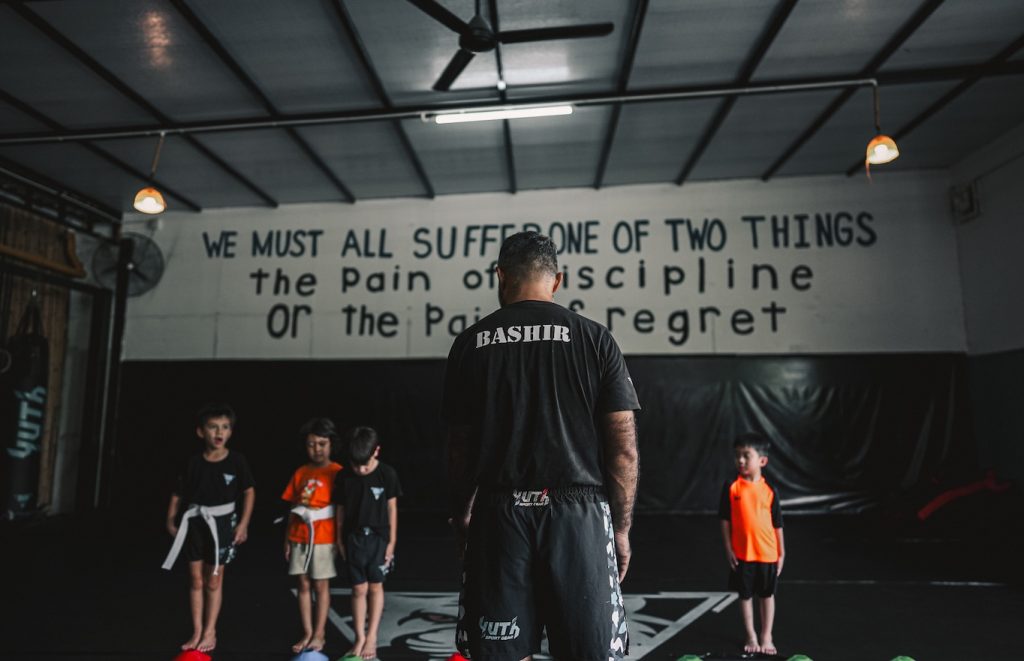
Honestly?
I can’t think of some enormous mistake that I would go back and undo.
There were lots of little mistakes.
With hindsight, I could say that maybe I should have dealt with more of the bureaucratic nonsense and jumped through more of those hoops at the very beginning.
That might have saved me some hassles later.
But would it actually have been the right decision?
Maybe I would have spent months dealing with bureaucracy while burning through my savings and earning no revenue.
Hindsight is 20/20.
Sometimes the imperfect decision that gets you moving is better than the theoretically perfect decision that keeps you standing still.
Becoming a Contender
There is a Conor McGregor quote that I used with some of our earliest members, basically as soon as we had a roof over our heads:
“We’re not here to take part. We’re here to take over.”
Conor McGregor
There’s obviously a certain arrogance to that statement.
And honestly, that isn’t really who I am.
But at the same time, when you are the new kid on the block in an extremely competitive industry, I don’t know how you enter it with the intention of eventually reaching the top tier of gyms in Bangkok and Thailand without having at least a little bit of a chip on your shoulder.
I’m fortunate that I came into this with experience and accomplishments behind me.
But that creates expectations too.
Expectations I have for myself and expectations other people may have for me.
And somewhere in the darker corners of human nature, there are probably people who would get some satisfaction from watching me fail.
I don’t even mean that as a judgment.
That’s human nature.
Ironically, those are exactly some of the things that I want to reduce in myself and in the culture of Tiger Eye.
Through meditation, martial arts and trying to take a mindful and positive approach to training, hopefully we become a little less controlled by ego, jealousy and those sorts of impulses.
But we also don’t live in some metaphysical world in another dimension.
We live on planet Earth.
We’re primates with ambitions.
And until AI takes over in the next few hundred years, I don’t see all of that disappearing.
Some of those impulses even have positive effects.
They push us forward.
They’re just a double-edged sword.
What Does “Becoming a Contender” Actually Mean?
It doesn’t mean we have to become the biggest gym in Thailand.
And it doesn’t mean we need to immediately produce a collection of champions.
For me, becoming a contender means our fighters are competing at the big stadiums and doing well.
We’re in the mix.
When somebody from one of the top camps sees that they’re fighting somebody from Tiger Eye, they know they’re in for a fight.
That’s what I mean by becoming a contender.
We’re not there yet.
That’s the next chapter.
Right now, we’re putting a significant amount of what we’ve earned back into the property and building the infrastructure that will allow us to try.
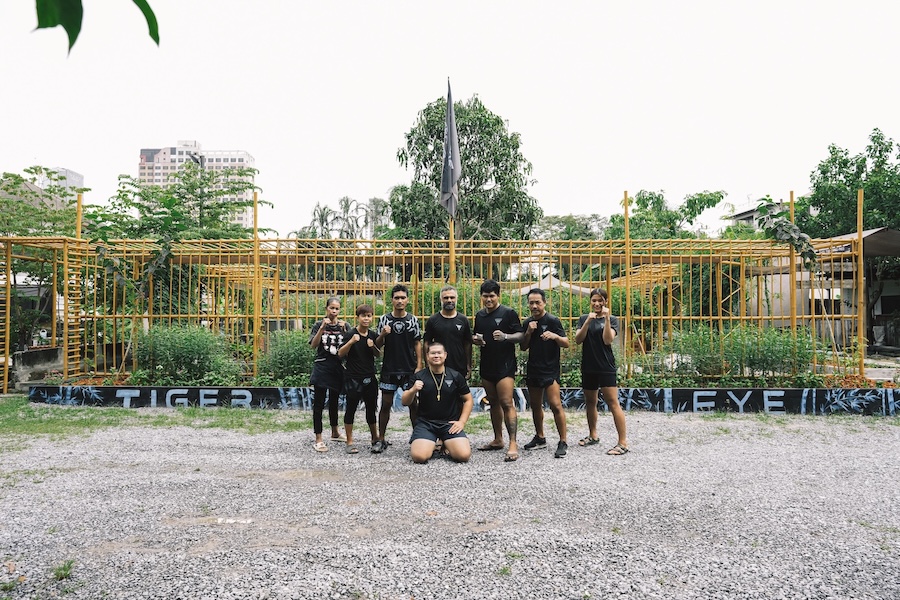
And almost three years after I was running through every soi in Ari looking for somewhere—anywhere—to put this gym, I can look around and see the beginnings of the place that existed in my head long before Tiger Eye existed.
Not exactly how I imagined it.
In many ways, better.
If I could go back three years and talk to myself while I was running around Ari looking for a location, knowing everything that was coming—the construction, the money, the uncertainty, the noise complaints, police stations, government offices, bureaucracy and stress—would I still do it?
A hundred percent.
Because I still believe what I believed when we took that first imperfect opportunity.
You have to move.
You can wiggle. You can squirm. You can try something that doesn’t work. You can end up somewhere you never expected to be.
But you have to create movement.
Because sometimes that little bit of movement creates some space.
And sometimes that space becomes the opportunity you were looking for all along.