

TIGER EYE / DTV 101
What Is a DTV Visa? Thailand’s Destination Visa Explained
The DTV, or Destination Thailand Visa, is a five-year, multiple-entry visa for remote workers, freelancers, and people who come to Thailand for soft-power activities such as Muay Thai, cooking, or medical treatment. It allows a stay of up to 180 days per entry and was introduced in July 2024.
The DTV is not a work permit. It does not let you work for Thai employers or Thai clients. This page covers the work rules in detail further down, so they are only explained once.
This guide explains what a DTV visa in Thailand is, who qualifies, the documents you need, how to apply, and what you can and cannot do once you have it.
On this page
- Latest updates on the DTV in 2026
- Who qualifies for a DTV visa?
- Documents you need for a DTV visa
- Explaining the 500,000 THB financial requirement
- How to apply for a DTV visa in Thailand
- How long does a DTV visa take to process?
- Common reasons DTV visa applications are refused
- How long you can stay with the DTV
- What you can and cannot do on a DTV visa
- Do DTV visa holders pay tax in Thailand?
- Using the DTV for Muay Thai and soft-power activities
- DTV visa FAQs
Quick reference
Validity
5 years
Stay per entry
up to 180 days
Extension
one per entry, plus 180 days
Financial proof
500,000 THB
Base fee
10,000 THB (varies by embassy)
Family
spouse and children under 20
Police clearance
required, from your country of nationality or residence
Where you apply
Thai e-Visa portal, from outside Thailand, through the embassy of the country where you are a citizen or permanent resident
DTV 101 / 01
Latest Updates on the DTV in 2026
On 31 August 2026, Thailand introduced two new requirements for the DTV. They apply worldwide and they change how you plan your application, so read this before anything else on the page.
1. You apply through your own country’s embassy
You now submit your application to the Thai embassy or consulate of the country where you hold citizenship or permanent residence. Previously you could choose whichever embassy suited you, and many applicants picked a neighboring country because it was faster or closer. That is no longer a valid option.
2. A police clearance certificate is now required
Every application now includes a police clearance certificate issued by your country of nationality or residence, dated within six months of the date you submit. Processing time varies by country, and in parts of Europe it takes several weeks, so this is the item most likely to hold up your application if you leave it until last.
Everything else stays the same:
- Five-year validity, and up to 180 days per entry
- The 500,000 THB financial requirement, including the three-month history most embassies expect
- Both application routes — Workcation and Soft Power — remain open
- The application is still submitted online, with no embassy appointment to attend
Applications that were submitted and paid for before 31 August 2026 are assessed under the previous rules. If you are already in the system, the new requirements do not apply to you retroactively.
What this means for your timeline. Before these changes, a straightforward application could be prepared in a matter of days. We suggest planning for around a month from starting your paperwork to submitting, because the police clearance sits in front of everything else. If you are working toward a specific arrival date, start earlier than you think you need to.
DTV 101 / 02
Who Qualifies for a DTV Visa?
The DTV is built for three groups of people:
- Remote employees who work for companies based outside Thailand.
- Freelancers and business owners whose clients and contracts are abroad.
- Soft-power or activity-based visitors, such as people who come to train, take a course, or receive medical treatment.
Every primary applicant must also meet a few baseline criteria:
- Be at least 20 years old.
- Have a clean Thai immigration record, with no blacklisting or serious overstays.
- Have no serious criminal convictions, evidenced by a police clearance certificate.
- Be a citizen or permanent resident of the country whose Thai embassy you apply through.
- Submit your application from outside Thailand.
A financial threshold of 500,000 THB applies to the main applicant. The full rules are explained in the financial requirement section below.
You can include your legal spouse and unmarried children under 20 as dependents. Each dependent applies separately, and only after the main applicant is approved. Note that each dependent must also meet the 500,000 THB requirement on their own, so a parent applying with one child needs to show 1,000,000 THB in total.
Not sure if you qualify? Our free eligibility check walks you through it in one minute.
DTV 101 / 03
Documents You Need for a DTV Visa
Every applicant must provide a core set of documents:
- A valid passport with at least six months of validity and blank pages for stamps
- A recent passport-style photo
- A police clearance certificate from your country of nationality or residence, issued within six months of the date you submit. Dependents under 16 can generally use the main applicant’s certificate instead of obtaining their own
- Proof that you are a citizen or permanent resident of the country you apply through, such as a passport, national ID, residence permit, or long-term residence status
- A bank statement that shows the required funds
- Proof that you paid the visa fee
Workcation applicants provide extra documents based on their work type:
- Employees: an employment contract or certificate, an employer letter that confirms remote-work permission and salary, and a recent payslip or tax return.
- Business owners: a business registration or incorporation certificate, a corporate tax return, and a short cover letter that explains the business and how it runs remotely.
- Freelancers: a portfolio, recent invoices, client contracts, and links to active professional profiles.
Soft Power applicants provide a different set of extras:
- An acceptance or confirmation letter from the host organization, such as a gym, cooking school, or hospital
- The host’s business registration or operating license, and in many cases a copy of the director’s ID
- Proof of how long the activity lasts
Dependents provide proof of relationship, such as a marriage certificate, birth certificate, or adoption papers, plus a copy of the main holder’s passport and DTV approval.
Embassies can ask for more than the standard list. Some may also request proof of health insurance, though it is not an official requirement at most. Unclear files or low-quality screenshots often cause delays, so submit clean and complete copies.
DTV 101 / 04
Explaining the 500,000 THB Financial Requirement
The main applicant must show at least 500,000 THB, or the same amount in a foreign currency such as USD, EUR, or GBP. The balance is measured on the date of your statement. Plan around the THB figure, because any conversion to dollars or euros is approximate and moves with the exchange rate.
The money does not have to sit in a Thai bank account. A home-country account is fine, and services like Wise are generally accepted.
The three-month rule. In most cases, you need to have held the balance for at least three months before you apply. Some embassies ask for three to six months of history, or a statement issued within the last 7 to 30 days. A large lump sum that lands in your account just before you apply is a common reason for refusal, because it does not show a stable balance.
What counts as proof
- Personal savings
- Current or checking accounts
- Fixed deposits
All of these must be held in your own name.
What does not count
- Cryptocurrency
- Stocks or investment portfolios
- Pension or retirement accounts
- Credit limits
- Business accounts
If you apply with a shared or family statement, you can use it as long as you also supply proof of your relationship.
DTV 101 / 05
How to Apply for a DTV Visa in Thailand
The single most important rule is that you cannot apply from inside Thailand. The application has to be submitted from abroad.
Since January 2025, the process is fully electronic. Applications are handled online through the official Thai e-Visa portal at thaievisa.go.th, and in-person embassy visits have largely been phased out. Since 31 August 2026 the processing embassy is no longer yours to choose: your application goes to the Thai embassy or consulate of the country where you hold citizenship or permanent residence, and that post reviews your file.
Here is how to apply for a DTV visa in Thailand, step by step:
- Request your police clearance certificate.
- Prepare the rest of your documents using the checklist above.
- Create an account on the Thai e-Visa portal (thaievisa.go.th).
- Choose the correct category, either Workcation or Soft Power.
- Upload your documents.
- Pay the visa fee.
- Wait for the decision, and respond quickly if the embassy asks for more documents.
The fee. The base government fee is 10,000 THB, paid by card through the portal. The amount varies by embassy and is commonly 10,000 to 14,000 THB, so treat it as a government fee that changes by location rather than one fixed global price.
Proving where you belong. Your embassy will want a document proving you are a citizen or permanent resident of that country, such as a passport, national ID, residence permit, or long-term residence status. This replaces the looser proof-of-current-location document embassies used to accept, so a hotel booking or utility bill is no longer enough on its own. Requirements vary by embassy, so check what yours asks for.
DTV 101 / 06
How Long Does a DTV Visa Take to Process?
A DTV visa is usually processed within a few weeks. The official range is around 5 to 15 business days, but in practice it varies widely. Some applicants are approved in a few days, while others wait several weeks. Timing depends entirely on the embassy.
That figure only covers the embassy’s side. Since 31 August 2026 you also need a police clearance certificate before you can submit, which adds days to weeks depending on your country. We suggest planning for around a month from starting your paperwork to holding your visa.
The most common thing that lengthens the wait is a request for more documents, because that resets the clock. Complete and clear files help your application move faster, but no embassy guarantees a turnaround time.
DTV 101 / 07
Common Reasons DTV Visa Applications Are Refused
A few problems cause most DTV refusals. Each one has a clear fix.
- Using crypto or investments instead of cash. Embassies want liquid funds. Hold the money as savings or in a checking or fixed-deposit account in your own name.
- A balance that appears only just before you apply. A sudden deposit looks unstable. Keep the required balance in your account for at least three months before you apply.
- Applying from inside Thailand. The application must be submitted from outside the country.
- Weak work evidence. Freelancers with no contracts or invoices struggle to prove their income. Gather contracts, invoices, and client details before you apply.
DTV 101 / 08
How Long You Can Stay with the DTV
Each time you enter Thailand on the DTV, you can stay for up to 180 days.
You can extend that stay one time per entry. You apply at a Thai immigration office and pay a fee of around 1,900 THB, which gives you another 180 days. Together, one entry plus one extension allows up to roughly one year of continuous stay.
After that, you leave and re-enter to reset the period. The DTV is a multiple-entry visa, so you do not need a separate re-entry permit, and each new entry grants a fresh 180 days.
If you stay more than 90 days in a row, you must file a 90-day report of your address with immigration. The report itself is free, and you can now file it through the immigration app or website. You only face a small fine if you miss it.

DTV 101 / 09
What You Can and Cannot Do on a DTV Visa
What the DTV allows
- Remote work for foreign employers or foreign clients, as long as your income and contracts are based abroad
- Multiple entries and exits across the five years
- Taking part in soft-power activities, such as training or cultural courses
What the DTV does not allow
- Working for a Thai company or taking on Thai clients
- Holding a Thai work permit under this visa
- Enrolling in a full-time university degree
A note on study: short soft-power and cultural courses are fine, but Thai language study falls under the ED visa, not the DTV.
On business: you may hold shares in a Thai company, but you cannot act as a working director or run daily operations without the correct work permit and visa.
DTV 101 / 10
Do DTV Visa Holders Pay Tax in Thailand?
Tax in Thailand depends on whether you become a tax resident. If you spend 180 days or more in Thailand during a calendar year, you are generally treated as a tax resident.
This 180-day tax rule is separate from the 180-day immigration rule that controls your stay per entry. People often confuse the two, but they measure different things.
Since January 1, 2024, under a rule known as Por 161/2566, tax residents generally owe Thai tax on foreign income they bring into Thailand, in any year that they remit it.
There is one significant exception. Income you earned before 1 January 2024 falls outside that rule and can be remitted tax free, under a companion rule known as Por 162/2566. Being able to show when your money was earned therefore matters, which is why keeping statements from before that date is worth doing.
A relaxation was proposed in 2025 that would exempt foreign income remitted within two years of being earned. As of mid-2026 that proposal is not law, so plan around the rules above rather than around the proposal.
The details depend on your situation, so speak with a qualified tax advisor before you make plans.
DTV 101 / 11
Using the DTV for Muay Thai and Other Soft-Power Activities
Soft power is the part of the DTV built for activity-based stays. It covers Muay Thai training, Thai cooking courses, sports and wellness programs, cultural events, and medical treatment.
Embassies generally want to see a program of meaningful length, often around six months. Shorter programs can still be accepted, but what we see from experience is that longer programs come back with a higher acceptance rate, and we think that is because they show the embassy a stronger plan. A training enrollment is usually structured to cover the longer period, so the dates on your enrollment match the stay you ask for.
You also need to train at a government-certified gym. From the host, you need three things:
- An acceptance or enrollment letter that names you, states the program and its dates, and shows the school’s registration details
- The gym or school’s business registration, and often a copy of the director’s ID
- Proof of how long the program runs
A vague letter with no dates or registration is weak and can slow your application.
The DTV suits training visitors better than repeated tourist visas or border runs. It is built for several long stays across five years, so you are not restarting a short visa every few months.
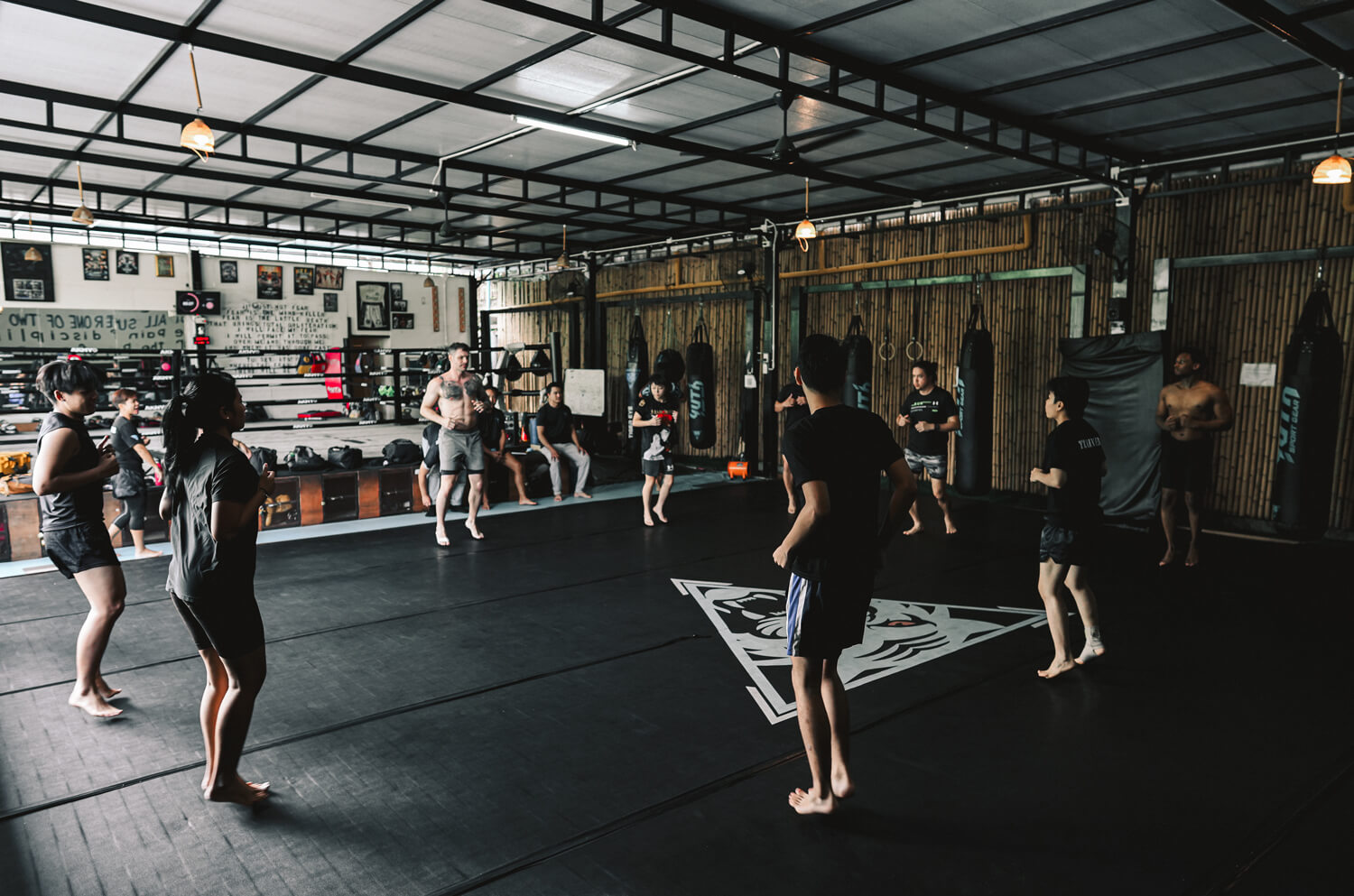
Tiger Eye MMA is a licensed Muay Thai gym in Bangkok with its own in-house visa team. The gym issues the enrollment documents and supports applicants who train under the Soft Power route.
DTV 101 / 12
DTV Visa FAQs
Is the DTV the same as the “Thailand Digital Nomad Visa”?
The official name is the Destination Thailand Visa. Many people call it the Thailand digital nomad visa, but that is an informal nickname rather than a separate visa.
Is there a minimum income requirement for the DTV?
There is no fixed income requirement. Even so, you should be ready to show proof of income, such as payslips or account transactions. This is separate from the 500,000 THB savings proof.
Do I need to keep 500,000 THB in my account for the full five years?
No. You show the funds when you apply, and again when you apply for an extension. You do not have to hold the balance continuously for five years.
Can I open a Thai bank account with a DTV visa?
It is usually difficult. Banks generally treat the DTV like a tourist visa, and opening an account on this category has become hard or unavailable at many banks.
Can I get a Thai driving license on a DTV visa?
It is possible but often hard in practice. You usually need a residence certificate first, which often requires a long-term rental agreement.
What happens to my DTV if my remote job ends or I change employers?
The visa stays valid for the full five years. You should still be able to show a qualifying activity when you enter, so enrolling in a soft-power activity can keep your status aligned with the visa.
Can I switch from a DTV to another visa without leaving Thailand?
Usually not. Changing to another visa category generally means leaving Thailand and applying for the new visa from abroad.
Which embassy do I apply through?
Since 31 August 2026, the Thai embassy or consulate of the country where you hold citizenship or permanent residence. You can no longer pick a neighboring country because it is closer or faster.
Do I really need a police clearance certificate?
Yes. It has been required on every application since 31 August 2026. It is issued by the authorities in your own country of nationality or residence, so it is not something we can provide for you.
Talk to a DTV Consultant
If you have questions about your own DTV application, our visa consultant will review your situation, confirm which embassy applies to you, and answer your questions. The consultation is free and there is no obligation.
 Google Reviews · 4.9 from 350+ reviews