

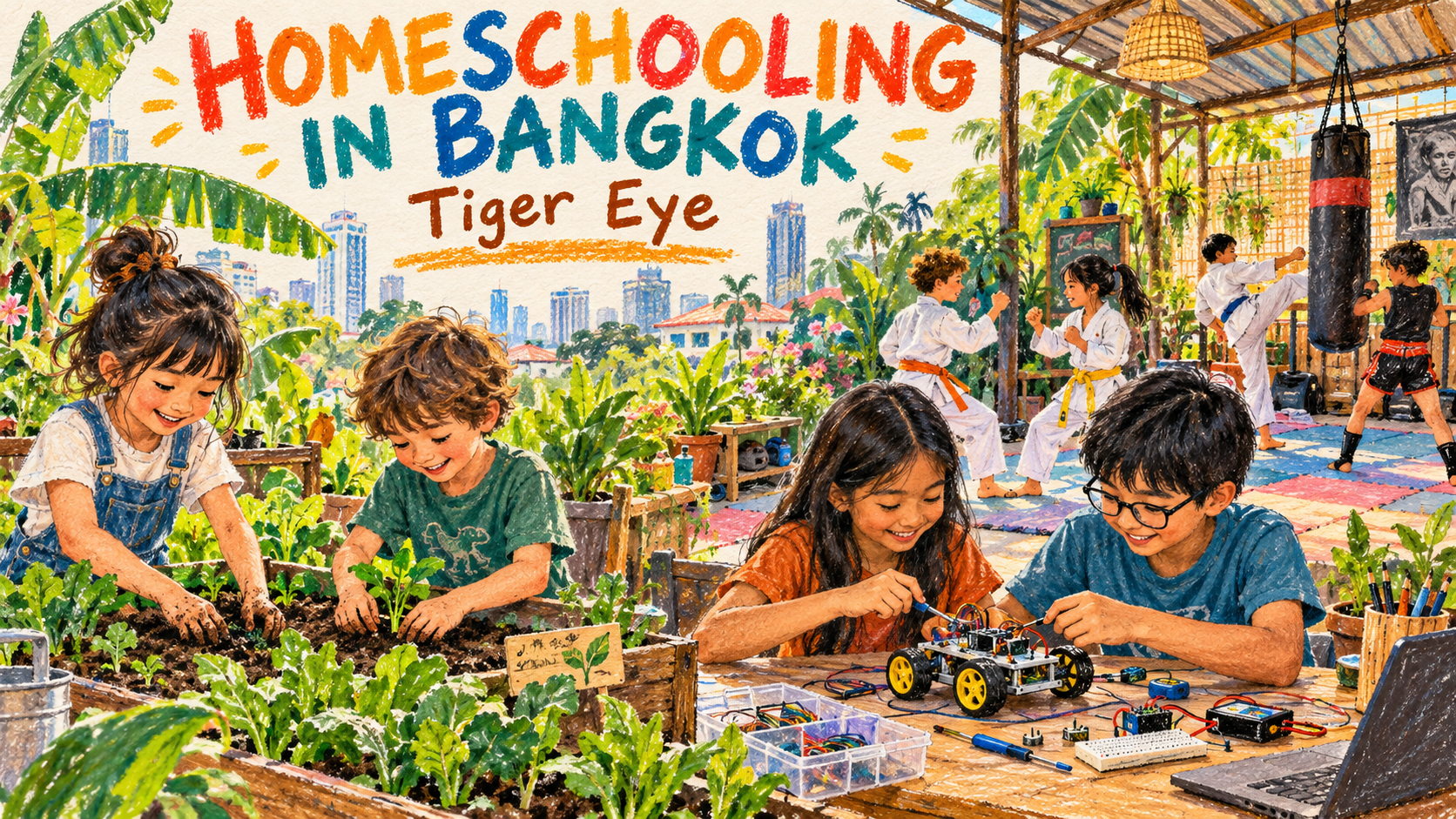
Even before I had my first child, I was considering homeschooling—or at least open to it.
That came from looking back at my own time at school and thinking about what I learned and where my knowledge comes from.
School certainly provided principles and fundamentals: reading, arithmetic and so on. But most of the knowledge I feel I have came from independent reading.
I also think about how much time was wasted in school. Of course, a lot of that falls upon me, but I think some of it comes down to the system as well.
Coupled with that is the fact that the world has changed dramatically.
The person who knows the most facts is not necessarily the smartest person in the room.
People have always made that distinction, but it feels even more relevant now, when knowledge and information are so readily available.
I wanted our children to learn the fundamentals, but in a way that my wife and I could tailor to them.
I also wanted to spend more time with them.
Why We Chose Homeschooling in Bangkok
We moved to Bangkok when my oldest son was almost two. By then, we had more or less decided to homeschool.
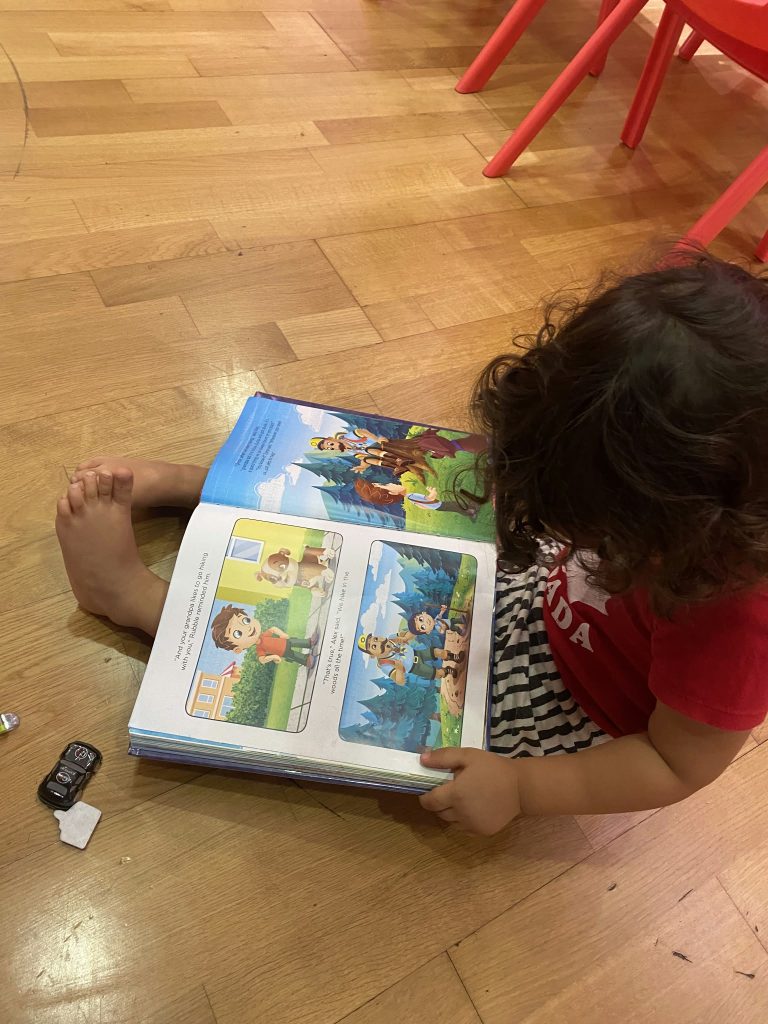
Before he reached school age, we were already seeing results. He could read, we were covering some things beyond what he would have been learning at school, and it took much less time than a full school day.
For us, that showed it could work.
Then there was the cost. I’m from the United States, and my wife is from Canada, where families have access to free public schooling. The options we were considering in Bangkok came with significant price tags.
Looking at those prices, thinking about what we were getting, and knowing what we had already experienced, homeschooling was really a no-brainer for us.
There was also a funny side note. When we were considering school, COVID was disrupting classrooms.
Why would we enroll him only for him to learn on a laptop at home?
Finding Other Homeschooling Families
Between 2022 and 2024, we started attending a co-op at a church around Asok/Nana. We met other homeschooling families through Facebook groups.
If you’re new to Bangkok, there are homeschooling communities here. There may be fewer than you’re used to if you come from somewhere homeschooling is common, but they do exist.
We also visited Nichada, which has the oldest and largest homeschooling community that I personally know of in Bangkok.
It was a good experience. The problem for us was the commute.
Had we lived closer, we might never have thought about organizing our own co-op activities.
That would be one of my practical suggestions: connect with other families, visit their activities, and think about what the journey will actually look like each week.
Garden Ninjas: How It Started at Tiger Eye
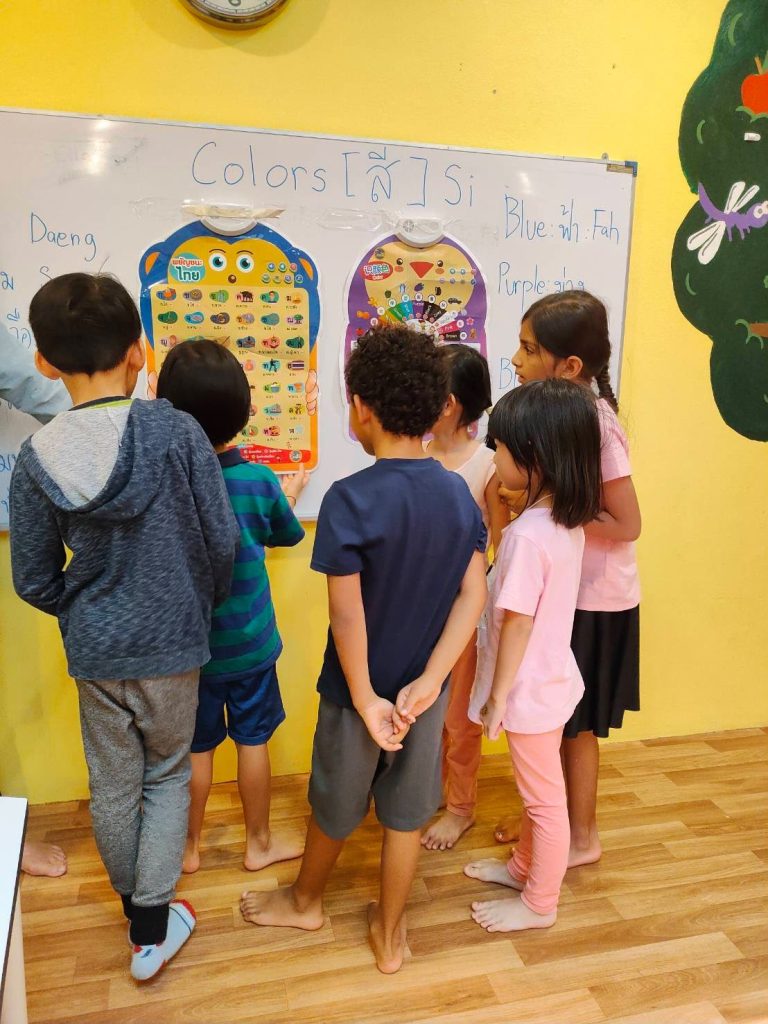
In 2024, we opened our current Tiger Eye location and started doing gardening and martial arts on Wednesdays.
We called it Garden Ninjas.
The children still attended the longer, more formal co-op day at the church on Thursdays. My wife and I continued teaching at home on other days.
We were limited on space, but we had enough for small planting projects and gardening activities.
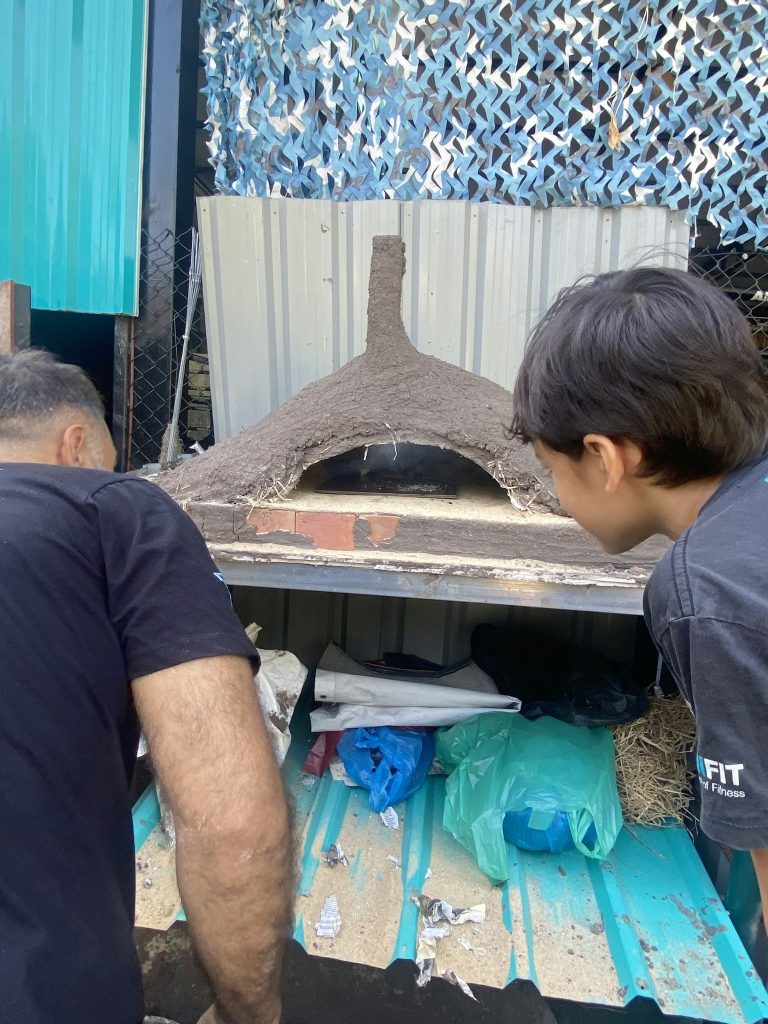
We even built a pizza oven.
We didn’t have much room around the gym, but we had enough to do those things. I’m very grateful for that.
Then, in August 2025, we expanded the gym and gained access to a building that could serve as reception and a classroom.
That was a game changer.
Around the same time, changes at the church meant the co-op needed to relocate. We combined the Thursday activities with our Wednesdays, creating the longer homeschooling day we have now.
Growing Food and Building Robots
Our philosophy is about preparing our children for the future, with skills across both ends of the spectrum.
I want them to understand gardening, homesteading, growing food and caring for animals. But I also want them to understand artificial intelligence, electronics and robotics, and be able to build things themselves.
The fun way I describe it to the kids is to imagine thirty years into the future, in a post-apocalyptic world.
Can you grow your own food? Can you take an old laptop, parts from a car and things our civilization left around, and build robots?
It’s a playful way to think about it. But those are the kinds of skills I want them to learn.
They should be able to grow food and care for animals, while also building digital and mechanical systems.
What Our Wednesday Looks Like
We start at 10 a.m. with biological sciences, followed by martial arts and then electronics.
Electronics is a foundation for eventually making robots. The children need to understand how electrical systems work and have experience putting things together.
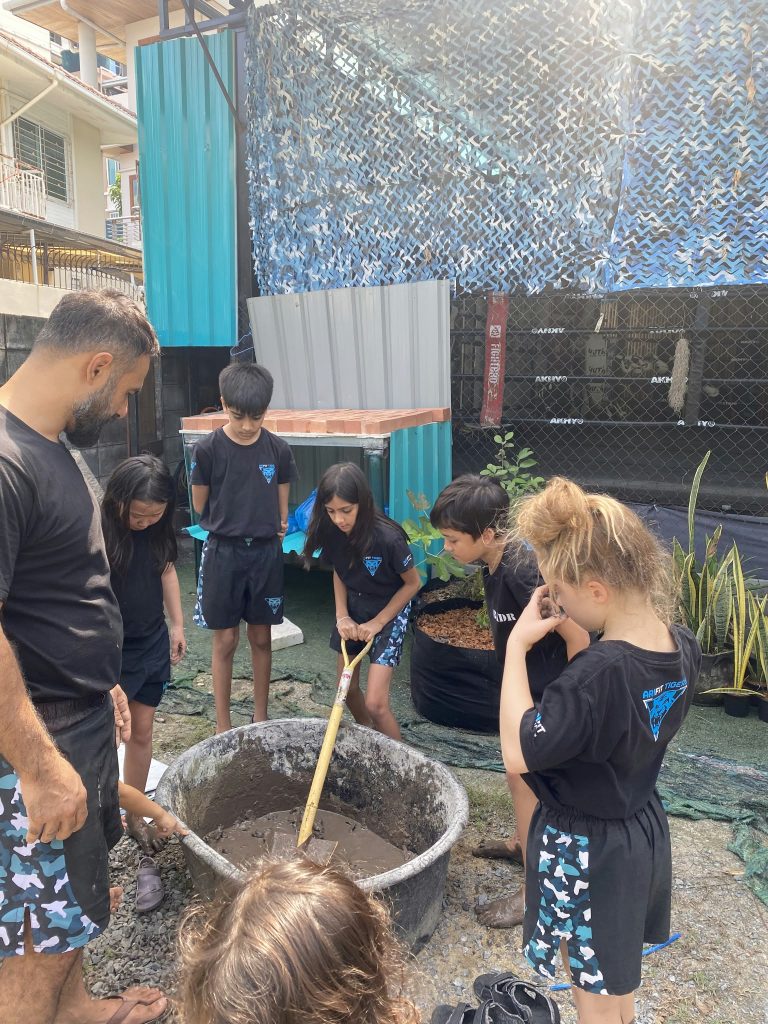
After lunch, they spend an hour gardening. We have chores, work on the garden, and revisit topics from biological sciences.
They might learn how soil works in class, then go outside and work in the soil.
Some children go home afterward. Others stay for the 4 p.m. martial arts class.
It’s still evolving. We’re trying to get better, and it’s a work in progress.
But I’m very happy with where we are.
Learning Alongside Our Children
I don’t feel our children are behind. I’m not going to claim they’re ahead, either.
Looking at their development, understanding and academic progress, I have no cause for concern. From our experience, I know it can be done.
We’re taking it year by year. We’re growing with it, alongside our children. Hopefully, what we learn with our first will help with our second, and eventually help us advise other families.
The Rise of the Remote Family
We’re familiar with the remote worker: someone traveling the world with a laptop.
But I think we’re seeing more of something else now.
The remote family.
We meet families at Tiger Eye who are homeschooling while traveling or spending extended periods abroad. This also connects with the interest we see in Thailand’s DTV.
The question is still, “What about school?” But connecting with homeschoolers on your travels is easier now, and so is accessing educational resources.
You don’t need to carry a library of books. A Kindle and an internet connection give you access to an extraordinary amount of material.
It’s a very different world.
For us, homeschooling in Bangkok has developed through meeting people, trying things and building on what works.
I’m very grateful for what we have, and I’d love to hear from other families.
What has worked for you, and what would you like to see more of in Bangkok’s homeschooling community?