

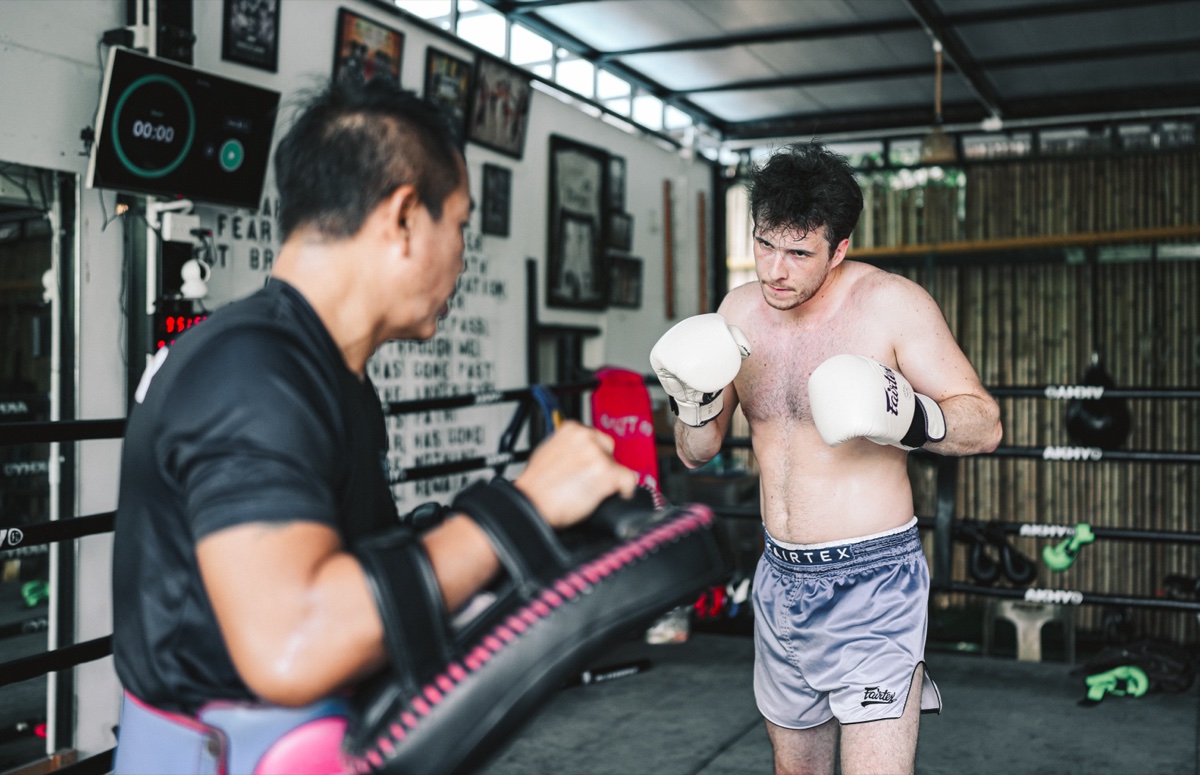
There is something unusual about Muay Thai culture outside Thailand.
Coming to Thailand to train has become almost a pilgrimage for Muay Thai practitioners.
Think about some of the other martial arts. Millions upon millions of people have practiced Taekwondo outside Korea over the years. Karate has been practiced around the world on a massive scale for generations.
People certainly travel to Korea to train Taekwondo and to Japan to train karate, but it doesn’t seem to occupy quite the same place in those martial arts cultures.
With Muay Thai, Thailand is always there.
Walk into almost any serious Muay Thai gym in the United States, Europe, Australia or elsewhere and there’s probably somebody there who has trained in Thailand. Someone else is planning their first trip. And the people who have already been here are often thinking about when they’re coming back.
At some point, if Muay Thai becomes a serious part of your life, the thought enters your head:
I need to go to Thailand.
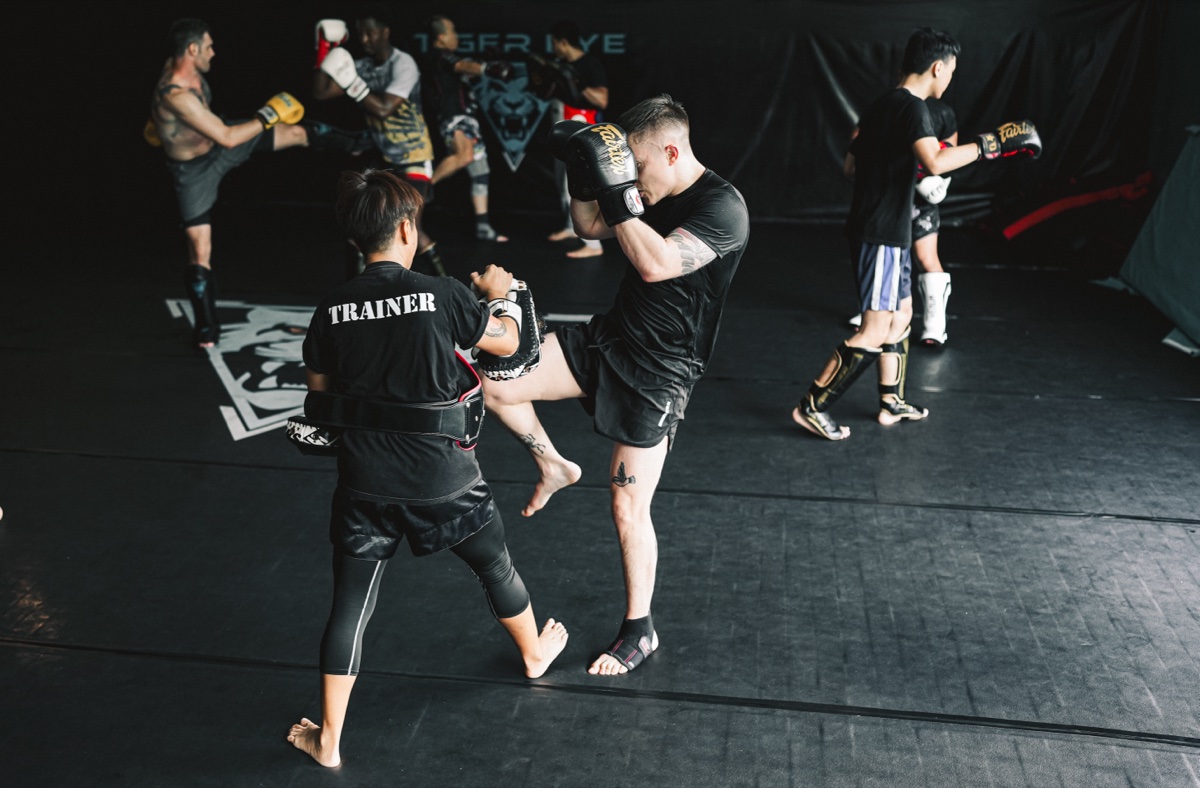
For some people that’s a two-week training holiday. For others it’s three months. For some it’s a year.
And for a small number, what was supposed to be a temporary period of training turns into a much longer chapter of their lives.
Tiger Eye founder Bashir Ahmad’s own journey began with a short Muay Thai training trip to Thailand in 2006. It eventually led through professional fighting, ONE Championship and ultimately building a life and a gym in Bangkok. Read Bashir’s full story of how training in Thailand changed the course of his life.
But if you’re seriously considering moving to Thailand to train, the romantic part is only half the question.
The other half is practical.
Where should you live? How much money do you need? Should you travel between gyms or settle down? Can you work while you’re here? What visa makes sense? And what does day-to-day life actually look like when Muay Thai becomes the center of your schedule?
What Does “Moving to Thailand to Train” Actually Mean?
First, let’s define what we’re talking about.
This isn’t necessarily about immigrating permanently, becoming a Thai citizen or deciding where you’re going to spend the rest of your life.
It’s about making Thailand the center of your life for a period of time.
Maybe that’s six months.
Maybe it’s nine months.
Maybe it’s a year.
Maybe it’s two years.
Maybe you don’t know yet.
That’s part of the appeal.
If you’re only coming for a few weeks, that’s really a training holiday. It can be a fantastic experience, but you’re still essentially visiting Thailand.
Once you start talking about six months, nine months or a year, you’re talking about something different.
You’re building a life here.
And that changes how you should approach everything, from choosing your gym to accommodation, transportation, food, visas and your budget.
Should You Travel Around or Pick One Gym?
There is an incredible amount of choice in Thailand.
Bangkok, Phuket, Chiang Mai, Pattaya, Hua Hin, Isaan and smaller cities can all give you very different experiences. Even within a single city, two gyms can offer completely different environments.
If you’ve never trained in Thailand before and you have a long period available, there’s nothing wrong with exploring.
Spend some time in different parts of the country. Try different gyms. See what suits you.
If you have a year, you could even divide it into blocks, perhaps spending a few months somewhere before moving to another gym or another part of the country.
But eventually, if your real objective is development rather than simply experiencing Thailand, there is enormous value in settling down.
Coaches need to get to know you.
Training partners need to understand you.
You need a routine.
You need somewhere that starts feeling less like a gym you’re visiting and more like your gym.
Constantly changing camps can be an incredible way to experience Muay Thai across Thailand.
But it’s different from actually living and training here.
Why Bangkok?
For someone considering a long-term stay, Bangkok offers something difficult to replicate elsewhere.
There is access to some of the deepest Muay Thai culture in the world: stadiums, fighters, trainers and gyms.
At the same time, you’re living in one of Asia’s major cities. There is public transportation, international airports, hospitals, shopping, restaurants, nightlife, parks, cafés and virtually every level of accommodation imaginable.
The important thing to understand is that Bangkok is enormous.
So don’t simply decide, “I’m going to live in Bangkok.”
Think about where you’re going to train and then decide where you’re going to live.
If you’re training once or twice a day, the difference between walking ten minutes to the gym and spending an hour crossing Bangkok becomes enormous.
Your gym shouldn’t just determine where you train. For a long-term stay, it should probably influence where you build your life.
Living Around Ari
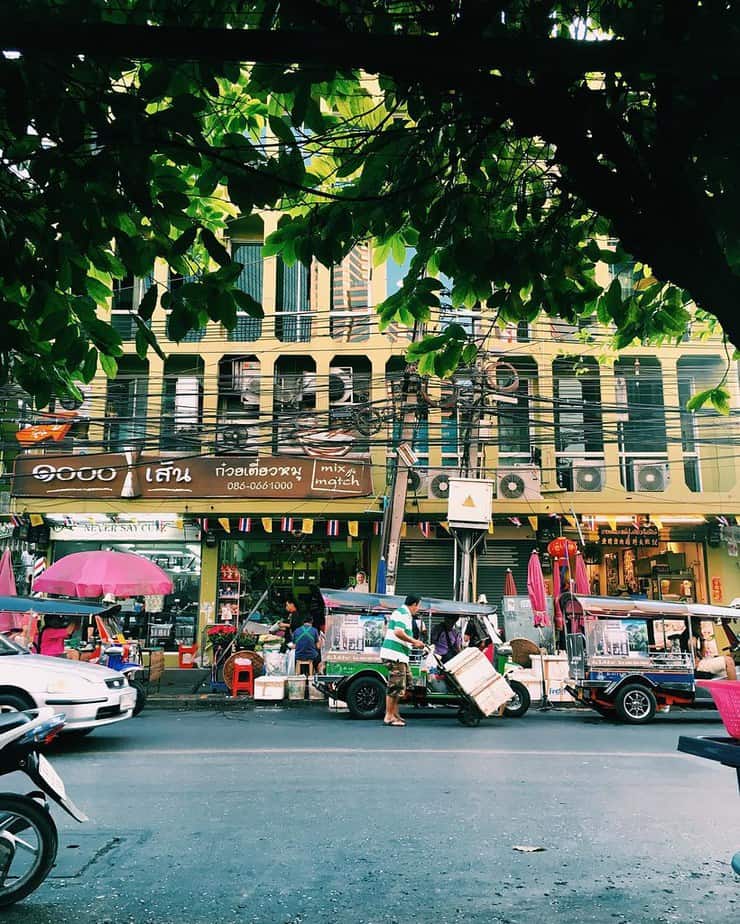
Tiger Eye Muay Thai & MMA is located in the Ari area of Bangkok.
Ari has become one of Bangkok’s better-known neighborhoods, particularly for its cafés, restaurants and relatively relaxed neighborhood atmosphere.
It offers access to central Bangkok without necessarily feeling like you’re living in the middle of one of the city’s busiest tourist districts.
Accommodation can, however, be more expensive than in some other parts of Bangkok.
“More expensive” needs some context.
It is possible to find basic accommodation in and around this part of Bangkok for roughly 5,000 baht per month. Something considerably nicer might cost 10,000 or 15,000 baht per month.
If you’re coming from the United States, Western Europe or another relatively high-income country, the difference between 5,000 and 7,000 baht might not sound dramatic.
But 7,000 baht is 40 percent more than 5,000 baht.
And 10,000 baht is double.
That matters when you’re trying to stretch savings over a year.
Don’t Necessarily Rent an Apartment Before You Arrive
If you’re planning to stay for a long time, there is very little reason to rush this decision.
Book a hotel or short-term accommodation near your prospective gym.
Come to Bangkok.
Train.
Walk around the neighborhood.
Look at actual apartments.
Ask people at the gym where they live.
Check local Facebook groups and property websites. Figure out where you eat, where you buy groceries and how you’re actually going to travel to training every day.
Give yourself a week or two. If necessary, give yourself a month.
You might spend slightly more on accommodation during those first few weeks. Over the course of a year, that extra expense is insignificant compared with choosing the wrong place to live.
And remember that the cheapest apartment isn’t necessarily the cheapest lifestyle.
Saving 3,000 baht on rent doesn’t make much sense if you then spend thousands of baht, and many hours, every month commuting to the gym.
How Much Money Do You Actually Need?
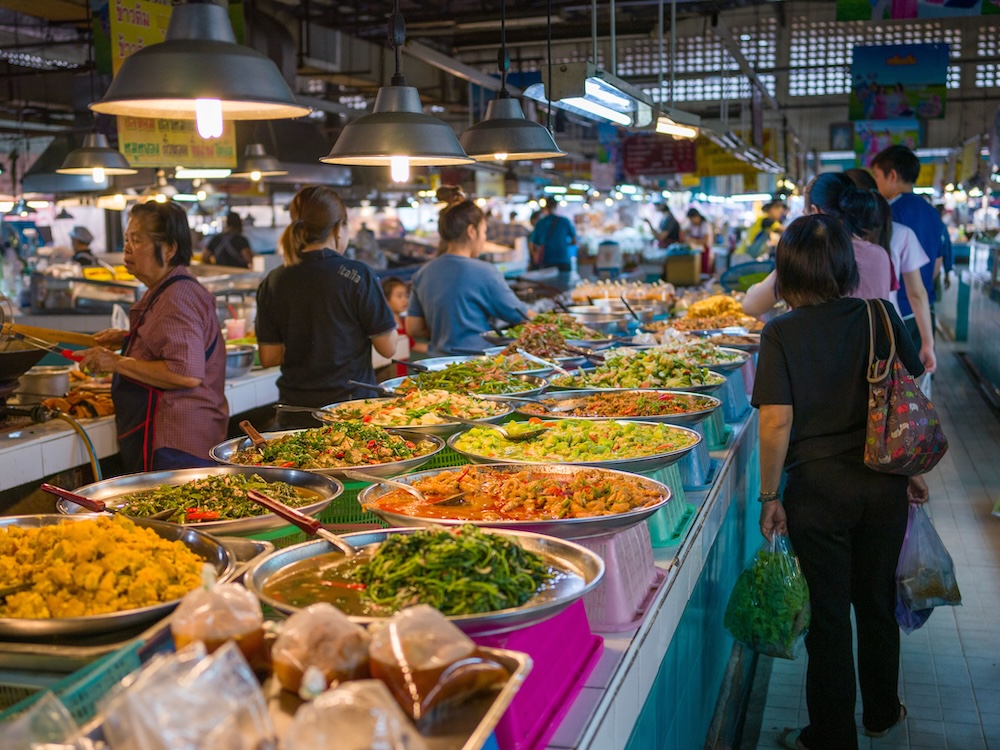
This is probably one of the biggest questions for anyone considering a long-term move.
And there is no universal Bangkok budget.
You can spend an extraordinary amount of money here if you want to. You can also live remarkably cheaply.
So instead of pretending there is one correct number, let’s use a realistic scenario:
A Westerner comes to Bangkok alone, primarily to train, wants to live comfortably enough, but also wants to make the money last.
Accommodation
Let’s assume a small but comfortable apartment: 15,000 baht per month.
You can certainly spend less. You can very easily spend more.
Food
If you’re mostly eating local Thai food, eating many meals outside, having a couple of coffees or perhaps a smoothie during the day, and buying some basic groceries for home, a reasonable working budget might be 300–500 baht per day.
That’s approximately 9,000–15,000 baht per month.
This isn’t a budget based around Western restaurants, expensive brunches and food delivery several times a day. But it also isn’t rice and instant noodles three times a day.
Bangkok makes it possible to eat very well without spending enormous amounts of money if you’re comfortable eating local food.
Transportation
This varies enormously.
Live within walking distance of your gym and your daily training transportation cost could effectively be zero.
If you’re regularly using motorbike taxis, Grab, the BTS and other transportation, you might budget as much as 200 baht per day, or roughly 6,000 baht per month at the upper end.
This is another reason choosing your apartment based on your gym makes so much sense.
Actually Enjoying Bangkok
You’re not coming all the way to Thailand just to see the inside of an apartment and a Muay Thai gym.
Let’s allow 1,000 baht per weekend, or roughly 4,000 baht per month.
That doesn’t mean going out partying every weekend. It means transportation, eating somewhere interesting, exploring a different neighborhood, visiting a market, seeing a fight, going somewhere with friends or simply experiencing Bangkok.
Training
Then there is the reason you came here in the first place.
Your training cost depends on the gym, length of membership and what you’re training.
At Tiger Eye, for example, the current one-year Muay Thai training program is 60,000 baht, which averages to 5,000 baht per month over a year.
The Unexpected
Finally, add at least another 10 percent.
Life never follows a spreadsheet perfectly.
You’ll buy something for your apartment.
You’ll replace gloves or equipment.
You’ll take an unexpected taxi.
You’ll get invited somewhere.
You’ll take a short trip.
Something will happen.
A budget without a buffer isn’t really a budget.
A Realistic Monthly Training Budget
Put those numbers together and the basic calculation looks something like this:
- Accommodation: 15,000 baht
- Food, drinks and groceries: 9,000–15,000 baht
- Transportation: 0–6,000 baht
- Weekends and exploring Bangkok: 4,000 baht
- Muay Thai training: approximately 5,000 baht per month based on Tiger Eye’s annual package
- Plus approximately 10 percent for miscellaneous expenses
Before the miscellaneous buffer, that gives a working range of roughly 33,000–45,000 baht per month.
Add 10 percent and you’re looking at approximately 36,000–50,000 baht per month.
That isn’t poverty.
And it isn’t luxury.
It’s a useful example of what a Westerner might spend while living reasonably comfortably, training seriously, enjoying Bangkok and still being conscious of making the money last.
Someone younger and willing to live very simply could spend considerably less. Someone at a different stage of life could easily spend two or three times as much.
Neither approach is wrong.
The important thing is understanding your lifestyle before calculating your runway.
The Real Question Is Your Runway
Once you know approximately what your lifestyle costs, the question becomes much easier:
How long can you sustain it?
At 40,000 baht per month, a year of living expenses is approximately 480,000 baht.
At 50,000 baht per month, it’s approximately 600,000 baht.
Suddenly, “moving to Thailand” becomes less of an abstract dream and more of a financial calculation.
And that’s useful.
If you’ve saved enough money for a year, you have one option. If you have savings plus some online income, you have considerably more flexibility.
If you have a fully remote job or freelance income that comfortably covers your expenses, then theoretically you can maintain this lifestyle for much longer.
Remote work has fundamentally changed what is possible for someone who wants to spend an extended period training in Thailand.
You no longer necessarily have to choose between earning money and being here.
“Can’t I Just Get an English-Teaching Job?”
You can.
But it’s worth distinguishing between two different things.
There is moving to Thailand to train.
And there is moving to Thailand to live and work while also training.
Neither one is wrong. But they’re not the same thing.
If you come here, find a full-time teaching job, commute to work, have fixed working hours, deal with everything that comes with maintaining employment and then fit your training around your job, your life is no longer primarily structured around training.
Your job becomes the center of the schedule.
Muay Thai has to fit around it.
If your original dream was to give yourself a year and find out what happens when training becomes the main focus of your life, that’s a different proposition.
Arriving with savings, remote income or some combination of the two gives you considerably more freedom to make training the priority.
There aren’t many periods in adult life when you can arrange everything around becoming better at something you love.
The DTV Has Changed the Equation
One of the biggest practical changes for people wanting to do this is Thailand’s Destination Thailand Visa, or DTV.
The DTV is a five-year, multiple-entry visa. Among its recognized purposes are Workcation applicants, such as digital nomads, remote workers and freelancers, and people participating in Thai Soft Power-related activities, which include Muay Thai.
Each entry can permit a stay of up to 180 days, subject to the applicable immigration rules.
For someone who has dreamed about spending a meaningful period of their life training Muay Thai in Thailand, that’s a major development.
The official financial requirement includes evidence of at least 500,000 baht.
But there is an important distinction:
500,000 baht is a financial requirement for the visa application. It isn’t the Thai government’s estimate of what it costs to live in Thailand.
Those are two completely different numbers.
Your actual runway depends on your accommodation, food, transportation, training, travel and lifestyle. And the budget above demonstrates why doing the calculation matters.
Workcation or Muay Thai?
The DTV includes different qualifying routes.
Someone working remotely may qualify under the Workcation category. Someone coming specifically for qualifying Muay Thai training may apply through the Thai Soft Power route, using confirmation of the activity as part of the supporting documentation.
Interestingly, someone may potentially fit both situations.
A person might be a legitimate remote worker while also genuinely planning to spend a substantial period training Muay Thai.
Documenting freelance work, clients, employment relationships, portfolios and income can sometimes involve substantial paperwork. If the person’s genuine purpose also includes long-term Muay Thai training, the Soft Power route may be relevant to their application.
Applicants should always look at the current requirements that apply to their specific circumstances. Individual Thai embassies and consulates may request additional evidence or interviews, and DTV requirements have evolved since the visa was first introduced.
Don’t build an application around someone’s Reddit post from last year.
Check the current requirements.
Using Muay Thai Training for a DTV Application
This is where a legitimate long-term training program becomes important.
Tiger Eye offers long-term Muay Thai programs in Bangkok and can provide supporting gym documentation for qualifying applicants applying through the Muay Thai/Soft Power DTV route.
That doesn’t mean a gym can guarantee a visa.
No legitimate gym should promise that. The decision belongs to the relevant Thai authorities.
What Tiger Eye can provide is the actual training program and appropriate supporting documentation from the gym’s side.
And once the visa side is dealt with, the much more interesting part begins:
Actually living here and training.
What Would a Year Look Like?
Imagine you’ve been training Muay Thai for several years.
You’ve been thinking about Thailand forever. Maybe you’ve already visited once. You have some savings. Maybe you have freelance or remote work bringing in money each month.
Instead of asking, “Could I move to Thailand forever?”
Ask a smaller question:
“Could I give myself one year?”
Start with the training. At Tiger Eye, the current one-year Muay Thai program is 60,000 baht.
Then calculate your accommodation.
Calculate your food.
Calculate transportation.
Give yourself enough money to actually experience Bangkok.
Add a safety buffer.
Now compare that against your savings and expected income.
Suddenly this enormous fantasy called “moving to Thailand” becomes arithmetic.
Arithmetic is much easier to deal with than a dream.
Training at Tiger Eye
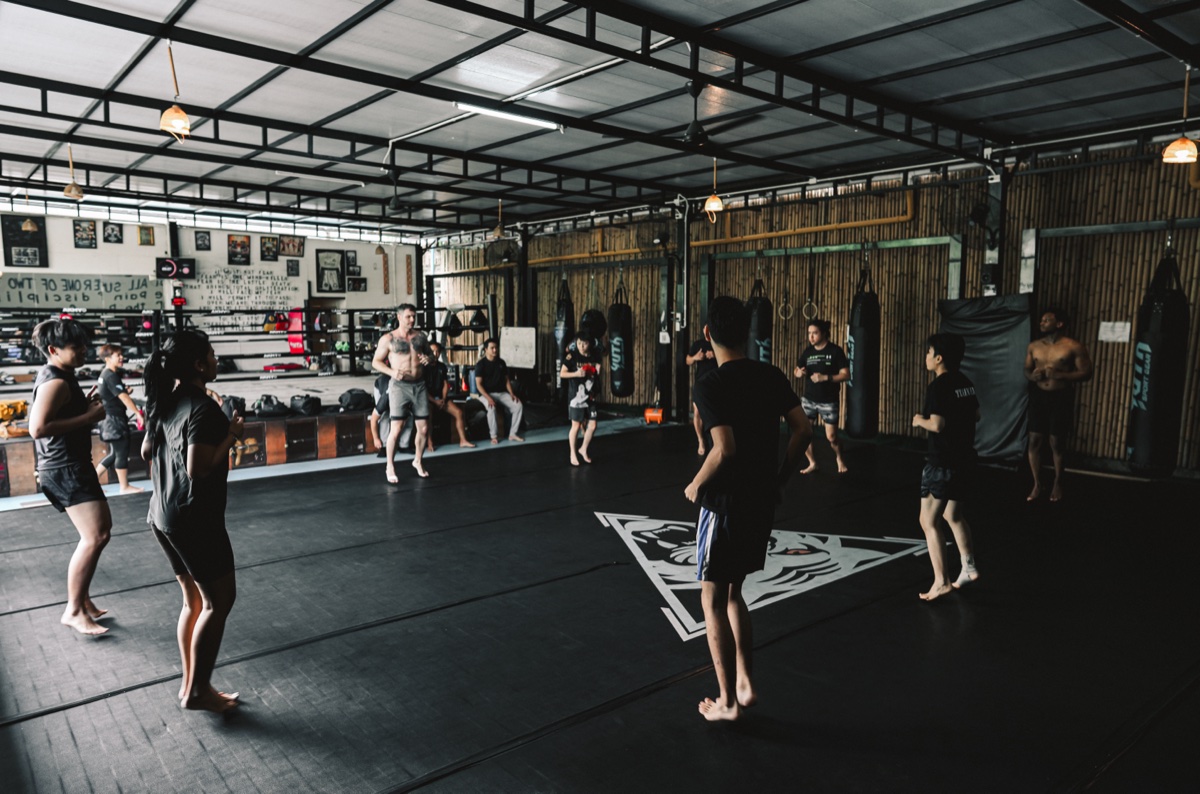
Not everybody who comes to Thailand should train at the same kind of gym.
That’s part of why it makes sense to visit gyms and see where you actually fit.
Tiger Eye is located in Bangkok’s Ari area and is built around martial arts as a lifestyle rather than simply providing a one-hour fitness class. The gym offers Muay Thai, boxing, MMA and Brazilian Jiu-Jitsu.
Some people train recreationally. Others compete. Some come to Bangkok specifically because they want to make martial arts a much bigger part of their lives.
Being in Bangkok also means you don’t necessarily have to choose between living at an isolated training camp and experiencing Thailand.
A normal day can become very simple.
Wake up.
Train.
Eat.
Work remotely if you need to.
Rest.
Train again.
Explore Bangkok when you have time.
Then wake up and do it again.
For someone who has spent years fitting Muay Thai around the rest of life, there is something very different about experiencing it the other way around.
You Don’t Have to Move to Thailand Forever
Perhaps the biggest mistake is making the decision larger than it needs to be.
You don’t have to decide whether Thailand is going to become your permanent home.
Give yourself six months.
Give yourself nine months.
Give yourself a year.
Come to Thailand.
Train seriously.
Learn some Thai.
Eat Thai food.
Go to the stadiums.
Get to know your trainers.
Get to know your training partners.
Become a regular somewhere instead of a tourist everywhere.
See what happens to your Muay Thai when your life is organized around training.
And see what happens to you.
Thinking About Moving to Bangkok to Train?
If you’ve been thinking about making your own Muay Thai pilgrimage to Thailand, Tiger Eye Muay Thai & MMA offers long-term training programs in Bangkok, including programs that can provide supporting documentation for qualifying DTV Soft Power applications.
The current one-year Muay Thai program is 60,000 baht.
You don’t need to know whether Thailand is going to become your home.
You don’t need to have the next five years mapped out.
Sometimes the question is much simpler:
Is this the period of your life when you’re finally going to come to Thailand and train?