

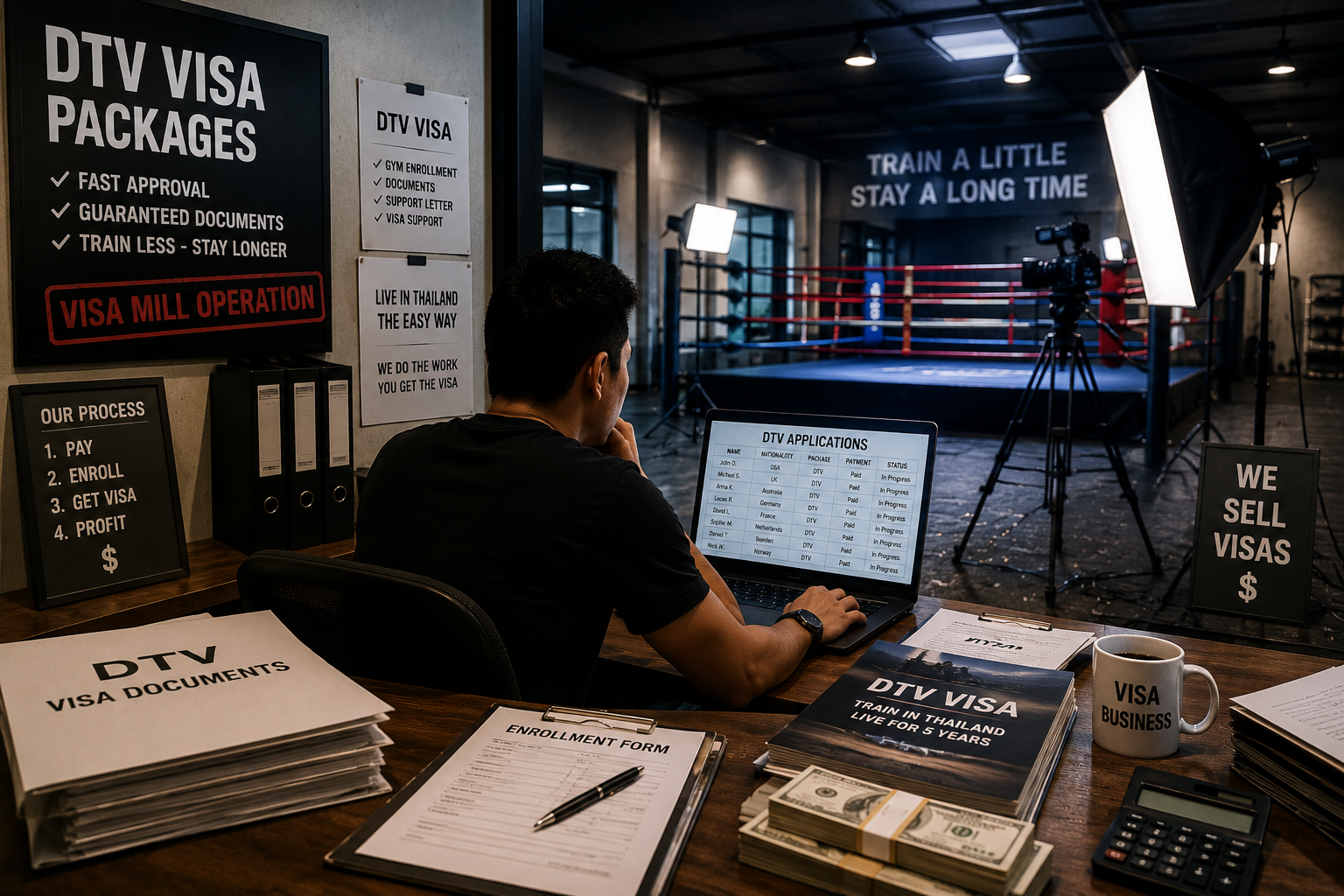
How to Choose the Right Gym for the Thailand DTV Visa
Thailand’s Destination Thailand Visa (DTV) has created opportunities for thousands of people to live and train in Thailand long-term. However, as demand for the visa has grown, so has the number of gyms offering to support DTV applications, and not all of them are what they appear to be.
Choosing the right gym is very important, not just for your training, but for the credibility of your application and the quality of your experience once you arrive.
This is a guide on what to look out for and how to choose a gym.
The Most Important Question to Ask Yourself
Before anything else, ask yourself this:
Would this gym exist if the DTV didn’t?
A legitimate Muay Thai gym breathes its own life with its own coaches, fighters, beginners, long-term members, and a training culture that existed before any visa program came along. If the answer to that question is uncertain, everything else becomes uncertain too.
Red Flags to Watch Out For
The gym appeared recently, with no history before July 2024
The DTV launched in summer of 2024. Any gym with no reviews, no social media presence, and no visible community before that date should raise questions. Established gyms have years of content, members, and reputation behind them.
There are no local students or long-term members
A real gym attracts people who train because they love it, not just because they need a document. If every face in the gym is a fresh DTV applicant and there are no regulars, that tells you something important about what the gym actually is.
There is no fight team or competitive structure
Muay Thai is a martial art with a long tradition of competition. Gyms that take training seriously produce fighters, or at a minimum, have coaches who have fought professionally. A gym with no fight team and no competitive culture is likely not a serious training environment.
No real coaching structure or timetable
Legitimate gyms run scheduled classes with qualified coaches. If a gym cannot show you a clear timetable, named instructors, and a structured program, it is worth asking what you are actually signing up for.
Pricing that seems unrealistically cheap
Experienced coaches, proper facilities, and real training programs cost money to run. If the pricing seems designed purely to attract visa applicants rather than reflect the actual cost of quality training, that is worth noting.
No physical culture or community
Walk into a real gym, and you will feel it immediately: the equipment, the atmosphere, the people who clearly belong there. Gyms that exist purely for visa purposes often feel like offices with a ring in the corner. That is because, in many cases, that is exactly what they are.
Green Flags to Look For
An established reputation that existed before the DTV
Look for gyms with years of reviews, consistent social media activity, and a visible community going back before 2024. A long track record is difficult to fake.
Real coaches with real credentials
Find out who is actually teaching. Do the coaches have professional fighting backgrounds? Have they trained people at a competitive level? Experienced coaching makes a difference both for your training and for the legitimacy of your enrollment documentation.
A mix of fighters and beginners
The best gyms welcome everyone, from complete beginners to competitive fighters. That range reflects a genuine training environment where people come for the sport, not just for the paperwork.
Transparent communication about the visa process
A gym with real DTV experience will be upfront about what the process involves, what documents they provide, and what to realistically expect. If a gym is vague, evasive, or guarantees outcomes they cannot control, treat that as a warning sign.
Proven application experience across multiple embassies
Processing a handful of applications is very different from handling hundreds across dozens of nationalities and embassies worldwide. Ask how many applications the gym has supported and what their track record looks like.
Long-term members who actually train there
The best endorsement any gym can have is members who keep coming back, not because they have to, but because they want to.
Why This Matters Beyond the Visa
Your DTV enrollment document is issued by your gym. If that gym has no credibility, no track record, or worse, has been flagged for issuing documents for non-genuine applicants, it can affect your application and your standing with Thai immigration down the line.
Thailand’s visa history has seen this pattern before. The education visa and volunteer visa were both eventually tightened after being exploited by operations that existed purely to issue documents rather than deliver a genuine program. There is no reason to assume the DTV will be immune to the same outcome.
Choosing a gym with real substance protects you, not just now, but for the full five years your visa is valid.
FAQ: Choosing a DTV Gym
Does it matter which gym issues my DTV documents? Yes. The gym’s legitimacy reflects on your application. A gym with a strong, verifiable track record is always the safer choice.
Can I train at a different gym after my DTV is approved? Your enrollment is tied to the gym that issued your documents. It is worth discussing your training plans with your gym before applying.
How do I verify a gym’s reputation? Look for Google reviews, social media history, and community presence going back several years. Ask the gym directly how many DTV applications they have handled and across which embassies.
For more information about how to start training Muay Thai and get the DTV Click Here